Forests of Fungi: Medicine & Meals from Mushrooms

“Protecting the health of the environment is directly related to our understanding of complex fungal populations. Our bodies and our environs are habitats with immune systems; fungi are a common bridge between the two.”- Paul Stamets author of Mycelium Running

My focus has shifted since I last wrote. While there are still loads of flowers and veggies to harvest at the farm, my hands are foraging from damp forests. My interest in mushrooms was inoculated the day before hurricane Irene.

“Lets make homemade pasta with a black trumpet mushroom sauce,” said my friend Laura one afternoon in Vermont. That meal began my love affair with fungi.

laura & chanterelles

Mushrooms ask to be slowly cooked in butter and cream. Life is better with butter, so finding a new ingredient that compliments its rich coating is blissful.

coral (probably not edible)

Obviously one has to very careful and know what they are doing when foraging for shrooms because many are inedible and toxic. Find a knowledgeable friend you can trust, buy a good identification book, and seek out a workshop.

hannah & mitaki, photo by ruthie oland

Since the seven inches of rain we got from the hurricane and another few inches the next week, the forest floor is covered in all kinds of treasures. Last week while walking by a river, it was almost impossible not to step on the colorful caps.

Bright orange chanterelles call out along trail-sides smelling of apricots.
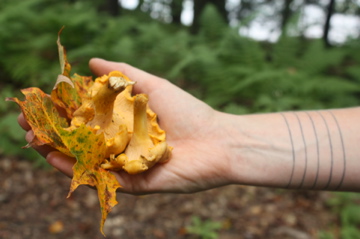
chanterelles & fall foliage

Black trumpets can be hard to find as they blend in with dead leaves, but we spotted over five pounds while walking to a swimming spot.

black trumpet chanterelles

Lion’s mane, a type of coral, grow on decaying logs.
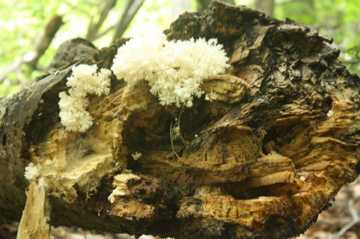
lion's mane

Puffballs pop up on mossy logs, not to be confused with the poisonous puffballs that emit dust when you step on them.
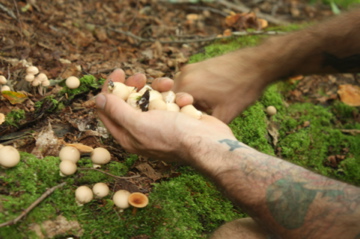
puffballs

Mitaki, or hen of the woods, grow under red oaks trees. They are very medicinal, high in vitamins, and boost the immune system. My mom spotted one growing on our front lawn beneath our ancient oak.

mitaki- hens of the woods

Cordyceps can be made into a tincture and used to replenish tired muscles after physical exertion.

cordyceps

Yellow footed chanterelles are not as tasty as other kinds, but edible.Like I said, many are toxic and just look really spectacular. Some are as big as my head and way more mysterious than growing annual vegetables. All mushrooms have a purpose, so admire their beauty and walk on.
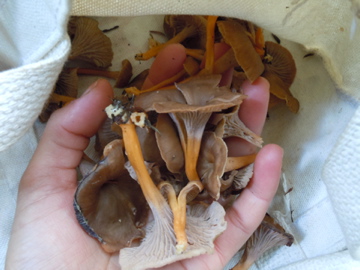
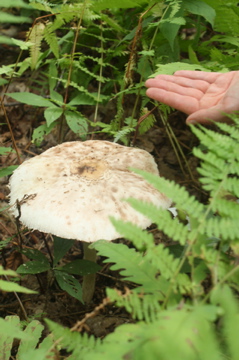
In Paul Stamets book, Mycelium Running: How mushrooms can help save the world, he writes about mushroom’s many medicinal uses such as anticancer, antibacterial, anti-inflammatory, antiviral, and cholesterol lowering properties.

Another example of mutual beneficial relationships between animals and mushrooms is how termites and leaf cutter ants construct their nests with organic matter to cultivate mycelium. Certain fungi act as natural bactericides and fungicides, therefore ants, snails, and other insects have figured out how to eat them and share them with their larvae. This partnering has allowed lineages of ants to survive more than 50 million years and establish massive colonies.

Not only does fungus have partnerships with insects and humans, it also has mutual beneficial relationships with plants and trees.  A specific fungi called ectomycorrhizal mycelium grows beyond plant roots and is able to bring distant nutrients (such as phosphorus, copper, zinc) and moisture to the host plant.
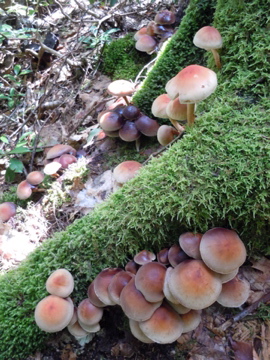
Bottom line: mushrooms are incredible and I strongly urge you to learn about them because they hold more power than we may ever know. Mushrooms are only 10% of the fungi family. And fungi outnumber plants at a ratio of 6 to 1. Only 10% of the mushroom species have been identified.

Each cubic inch of topsoil contains enough fungal cells to stretch more than 8 miles if placed end to end. They restore soil by decomposing and recycling plant debris, which is essentially how life-sustaining soil is created, according to Stamets. Composting is our version of what happens out in the woods when a tree falls and decomposes.
2 Comments

Filed under Uncategorized

Full Throttle

Life is Full with a capital “F.” Full of Flowers, Food, Family, Friends, and lots of Fun. And full of Farming, of course.

A whole month has passed since my last post and I have hundreds of photographs along with stories. My cousin Nell visited and worked on the farm for a week in mid-July. She doesn’t exactly come from the most agrarian wide open space part of the Northeast (NYC), but for 14 years old, she carries plenty of confidence and willingness to try just about anything. Her soft hands and pale skin took on the hottest, muggiest week of summer. Each day was full sun and almost 100 degrees.

Nell embraced every moment and we were able to accomplish many more projects with her around. The kale she transplanted looks fabulous (despite the weeds)! The tomatoes are almost to the roof of the field house since she last pruned! The lisianthus is in full bloom and happily supported by all the netting Nell assembled.

It was great having a family member to work with and show around the farm. We made a good team and had some good laughs. All those popsicles, post work swims, and blueberries kept us going during the heat wave. It’s hard to imagine as I sit here with a cup of tea under my covers while the rain continues to pour. It appears to be all or nothing weather this season.

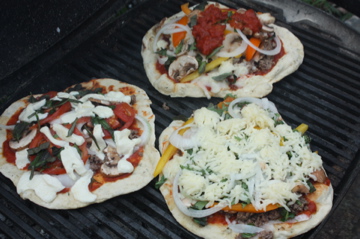
Between the CSA farm share we have at Mountain View Farm, our home garden, Old Friends Farm, and Crimson Clover Farm where my sister works, we eat really well. Last weekend we made pizzas on the grill. Rather than heat up the house with the oven, grill each side of the dough then add your toppings and grill once more to melt it all together.

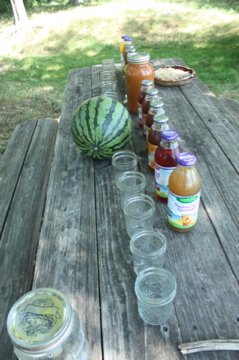
One of the best things about summer is eating outside. At the farm, we eat lunch almost every day at the picnic table with a grand view of the Holyoke mountain range. This past week we had a picnic lunch with the true “old friends,” Dana and Mary, who Missy and Casey named the farm after. This time, take out pizza and Snapple!

When you’re farming full time, you deserve a break from hard work. It feels good to surrender to ready made food and beverages. I will add that Tamsin baked a blueberry pie , Casey juiced our carrots, and Mary made potato salad from potatoes she grew.

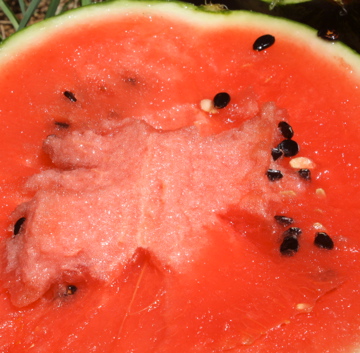
Watermelons! Although we don’t grow any due to woodchuck’s getting them first, there are plenty of other nearby farms who are supplying my daily watermelon intake.

Lisianthus are here in full swing! After a lot of preparation (burning tiny holes in landscape fabric, laying drip tape, seeding in late winter, transplanting careful not to bother sensitive root balls, staking, and netting), the time consuming rose-like blooms are telling us it was worth all the effort. Aren’t they spectacular? And we have over a ¼ acre to harvest.

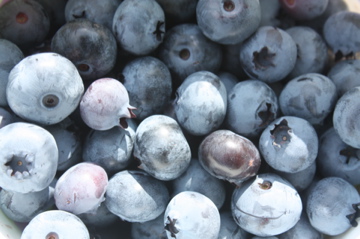
This is the time of year when it’s hard to imagine anything but long hot days with relentless weed pressure and 14 foot tall tomato vines threatening to poke through the clear plastic roof. Remember winter? It seems so foreign and out of reach right now. Sadly, some days I find myself looking forward to a good hard frost because that means I can slow down. But then I pop a few fresh blueberries in my mouth and forget I ever considered desiring plants to die back or become dormant.

One last quick update! The young hens are now laying about 60 eggs per day. Their eggs are ½ the size of a mature hen’s, which makes them oh so cute.

2 Comments

Filed under Uncategorized

Bring on the Heat, Indulge in the Sweet

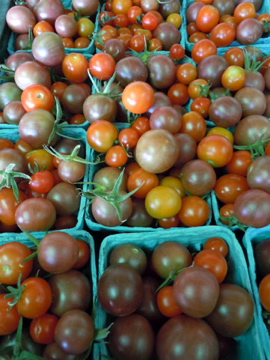
Small sweet treats are popping up all over. Raspberries, blueberries, cherry tomatoes, and gooseberries. To compliment all the deliciousness, there’s also lots of eye candy at the farm. Every color imaginable is represented in the cut flowers I am learning to grow and arrange in bouquets for the first time.

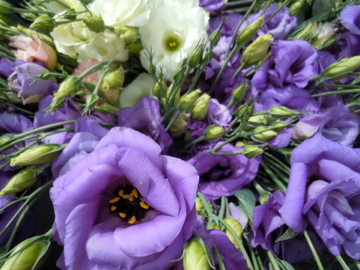
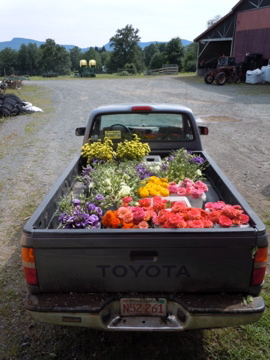
Green bells of Ireland, purple balloon flowers, red zinnias, yellow sunflowers, white statice, buttery cala lilies, pink goditia, orange butterfly bush, and grey blue sea holly. Our tables at market are filled with fragrance and beauty.

I am a true summer woman and fully embrace the long hot days. When I lay my head at night, I wonder if what I did that morning happened the day before since so much happens in just one day. This past week I house sat in South Amherst. There are 15 chickens and 4 pigs. By the time 10 p.m. rolls around, I wonder was I really up at 5:30 a.m. letting the chickens out and feeding the pigs? Or was that yesterday?

It was luxurious biking the two miles to work rather than eight and getting home before six meant I had more time to bathe, cook dinner, catch up with friends, relax, and prepare for another day.

I have been tenting in the family’s back yard that I house sat for the past two months which means less commuting, less biking/driving, less physical exhaustion. It’s a win-win situation for the family and me because I get to spend time with their kids and do some chores in exchange for a great location to put my tent. Soon I will erect a large tipi that my dear friend Margot built last year.

Sleeping under the stars and moon is the best in the summer because the nights tend to cool off enough for a good nights sleep. The fireflies are my entertainment rather than the television.

I cherish my time off. This weekend I am in New Hampshire visiting relatives. My Aunt Betsy organized a yoga retreat, which I attended for a day on the porch of the Manse. My cousins and I went kayaking and swimming in the reservoir yesterday. Mount Monadnock stands grand in my view right now as I sit on the porch until the heat drives me to Silver Lake for a dip.

Days like this remind me how important it is to have family close by. I feel very fortunate we all get along and share similar values despite our differences. I especially enjoy watching the women in my family lead all of us toward more sustainable, holistic lifestyles. For the first time, I am realizing that many of us consider Southern New Hampshire to be a home no matter where we were raised. Maybe someday more of my generation will gravitate to this home.

I know some of you are laughing because you know I am a summer woman and can’t tolerate more than a month of cold temperatures. But, we all have room to change. Brrr…enough of that winter talk! And now it’s reaching that point of the day when it’s too hot to sit here and type. The lake is calling my name. Enjoy the peak of summer!

1 Comment

Filed under Uncategorized

Well fed. And flowered, too!

June is the month that bright colors other than green start to pop up everywhere. Summer has finally returned. Almost all of the cold season crops have passed and our greenhouse space is slowly transitioning to flowers, ginger, and tomatoes.

It is finally sinking in that I work at a cut flower farm. Before we starting harvesting flowers, I admit that I questioned how much time, money, and labor went into growing a crop that can’t even be consumed (with the exception of nasturtiums). Now I am thrilled with each cut flower we grow.

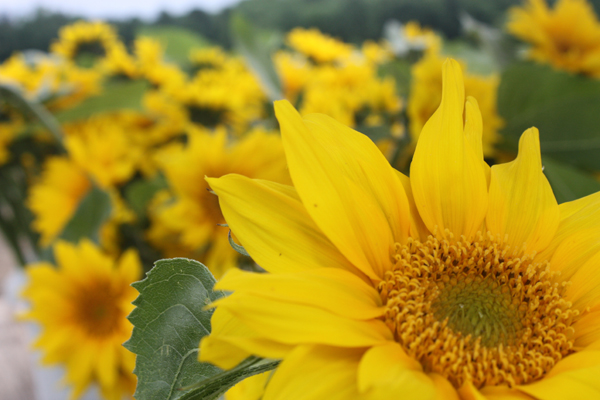
Every week I fall in love with whatever is ready to harvest. Two weeks ago I drooled over sweet william, now I am lusting over the sunflowers and canterbury bells. And the lilies, where to begin? They are just so elegant I feel completely at ease when I look at them.

Flowers bring joy and happiness to our hearts whether we’re aware of it or not. That alone is reason enough to grow flowers. We could all use a good mood boost living in this world, right? Of course the money they bring in doesn’t hurt either.

Speaking of the state of the world, I can’t neglect to mention the difficult weather patterns and the affect they have had on the farm. We have been extremely lucky with only a few crop losses due to too much rain, then high temperatures, then cold, then high again. The amount of rain we had this spring leached nutrients from the soil where we had a greens succession planted, causing the leaves to turn yellow and tiny plants to bolt (flower).

Our boc choi was not a fan of the wild temperature fluctuations either. Most of them bolted before we were able to harvest. When a plant bolts early, it usually means it is stressed and trying to reproduce before time runs out. Fortunately we have not yet planted in our wettest fields so no plants have rotted due to all the rain, like what is happening to many farmers in Hadley along the lower lands of the Connecticut River.

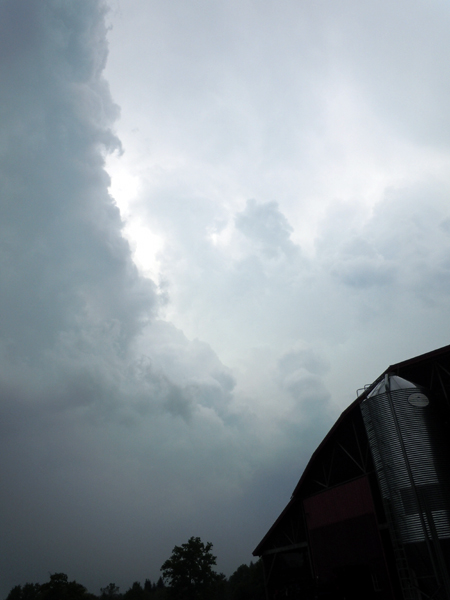
Stressed plants and golf ball sized hail can also cause a farmer to be a bit anxious. We have spent several afternoons watching dark grey clouds with a hint of green tumble towards us. The lightening has not been shy either. A tornado only 15 miles south of us makes me suspicious of how quickly we are seeing the affects of climate change. Mother nature is angry, and rightfully so.

I try to steer clear of the climate change topic because it is becoming too political for my taste. The problems we are having, and will continue to experience are urgent without a doubt. Much of the damage cannot be reversed- it is too late. There are still many ways to slow down and even halt our contributions to climate change. I applaud those who are working on this issue in all sorts of arenas.

Humans are very resilient and adaptable. Regardless of whether or not we caused climate change, the Earth is an ever-changing planet. The Earth had to change drastically over the last thousands of years in order to support the thriving human species.

Rather than “fighting climate change,” I am shifting my priorities to live more peacefully on this planet. The battle is absolutely worth “fighting” if you go after the major producers of CO2, such as the military. At this point in my life, I’d rather spend my days outside weeding carrots than in front of a computer networking with anti-war groups.

I am approaching this issue from another angle where I believe I can be most effective and still live a happy healthy life. Growing food, biking, hanging my clothes on the line, buying less stuff, and enjoying the present moment makes sense to me. If this ripples out to the bigger picture of reducing CO2 emissions, then that’s great. And if not, then I’m still not going to feel bad about it. If we lose a bed of a boc choi along the way, so be it.

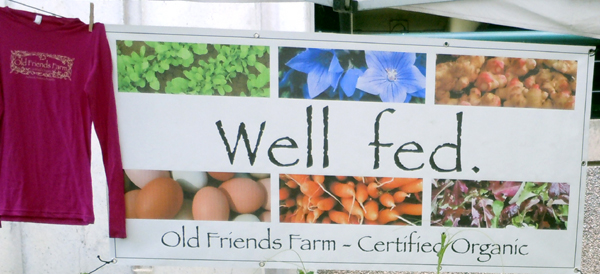
Enough of that. Let me move on to something we can all feel pleased about: the bounty of June’s harvest! Carrots, beets, radishes, haukerei, scallions, chard, greens, flowers, peas, strawberries, lettuce, and fennel! Farm fresh food we’ve been waiting for all winter is finally back. Old Friends Farm t-shirts simply say it all, “well fed.”

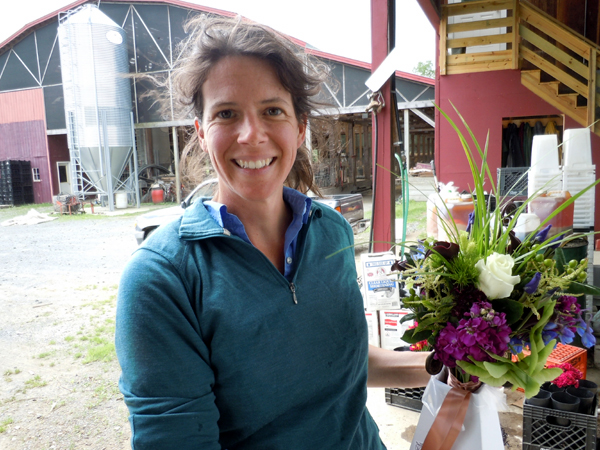
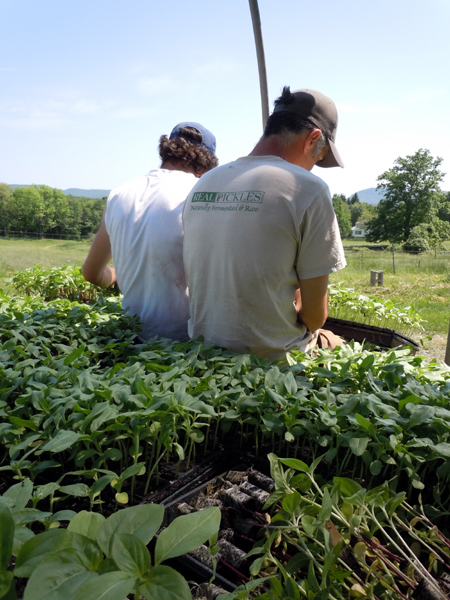
Here’s some snapshots of some of the wonderful people I work with…

Missy (owner) holding one of her wedding bouquets

Casey (owner) & Buzzy heading to transplant sunflowers

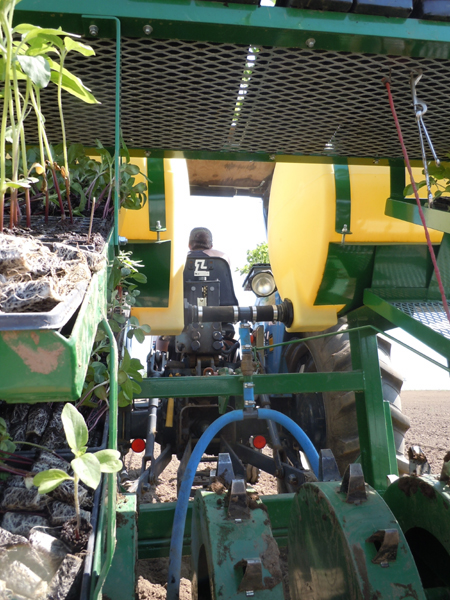
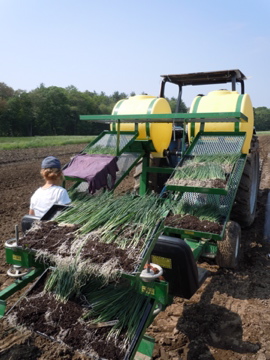
Lisa (assistant manager)- this is often my view of her as she drives the transplanter

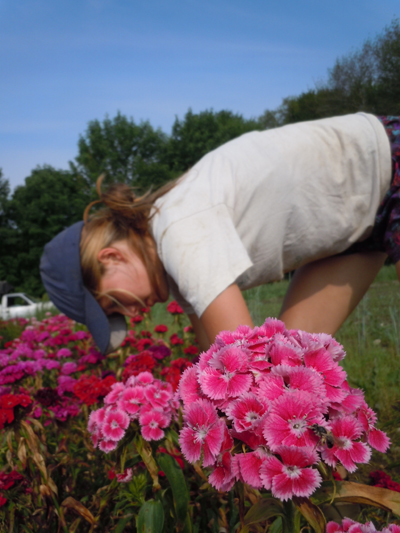
Tamsin harvesting sweet william

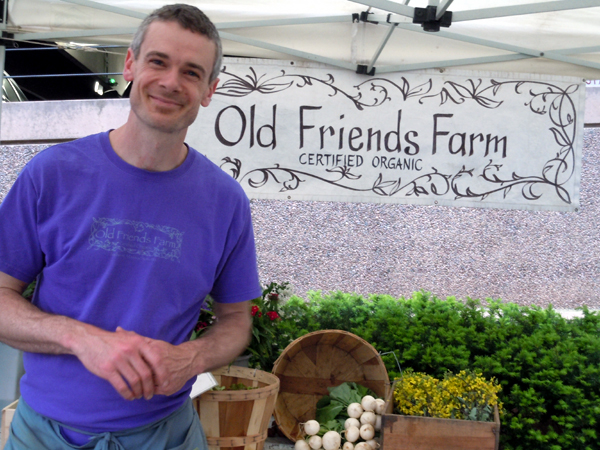
Phillip at the Northampton Tuesday Market

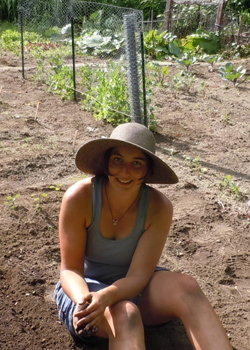
Me, planting soybeans in my garden

2 Comments

Filed under Uncategorized

A Slow yet Full Spring

The slow spring we’ve been experiencing parallels my relaxed transitions between traveling abroad, moving home, and starting a new job. Usually I rush into change and don’t leave much time to reflect and process. You know when the seasons seem to skip over spring and jump into hot, humid weather when we aren’t entirely ready? Fortunately it’s been a long cool, wet spring and I don’t feel totally behind.

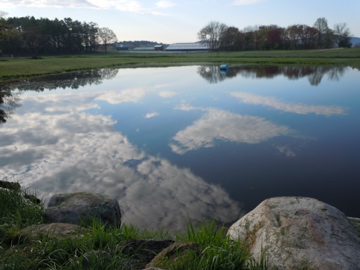
Irrigation Pond Early in the a.m. at Old Friends Farm

I highly recommend transition time. Finally after two months, my mind has caught up with my body. Three weeks ago I started work at Old Friends Farm (www.oldfriendsfarm.org) in Amherst feeling eager and excited to join a new team of farmers. And what a great crew we have! Subscribe to the weekly newsletter Casey puts together for regular updates.

Transplanting Leeks

Missy and Casey, farm operators and owners, are wonderful people and I am very grateful to have them as my bosses. They balance each other well. Missy gets silly when we all need a laugh and Casey bakes delicious muffins containing seasonal fare such as dandelion flowers. Lisa, assistant manager, can be very funny and keeps the team spirit high. She worked at Brookfield Farm and I can tell I have a lot to learn from her. Phillip works part time but I always notice when he is around because his calm presence resonates, except when directing the transplanter driver to start and stop. Buzzy, who you may see at the Amherst Market on Saturdays, is a natural farmer, even though it’s his first season farming. Tamsin is really good at bringing people together. She worked at Red Fire Farm last season and organized the Young Farmers Mixer. I admire how she models the importance of self-care even during physically demanding days.

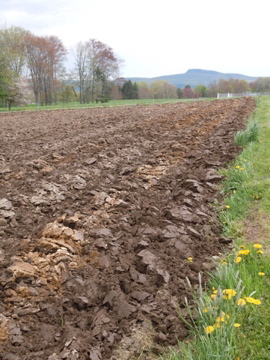
Freshly Plowed Field

The seven of us grow greens, veggies, cut-flowers, ginger, and eggs on top of Bramble Hill. There are about ten different season extending structures including tunnel cold frames, greenhouses, and the six newly constructed tunnels called the Hay Grove where we grow ginger, flowers, tomatoes, and early crops like radishes, spinach and lettuce. In addition to wholesale, we sell at four markets: Amherst on Saturdays, Northampton on Tuesdays, Copley Square on Fridays and Newton on Tuesdays.

Remember my six darling hens last season? Well, they are doing just great in Greenfield on their urban plot. My friends who adopted them brought me a dozen eggs and they are much bigger than before. I tried my first pickled egg which they made this past winter and it was delicious.

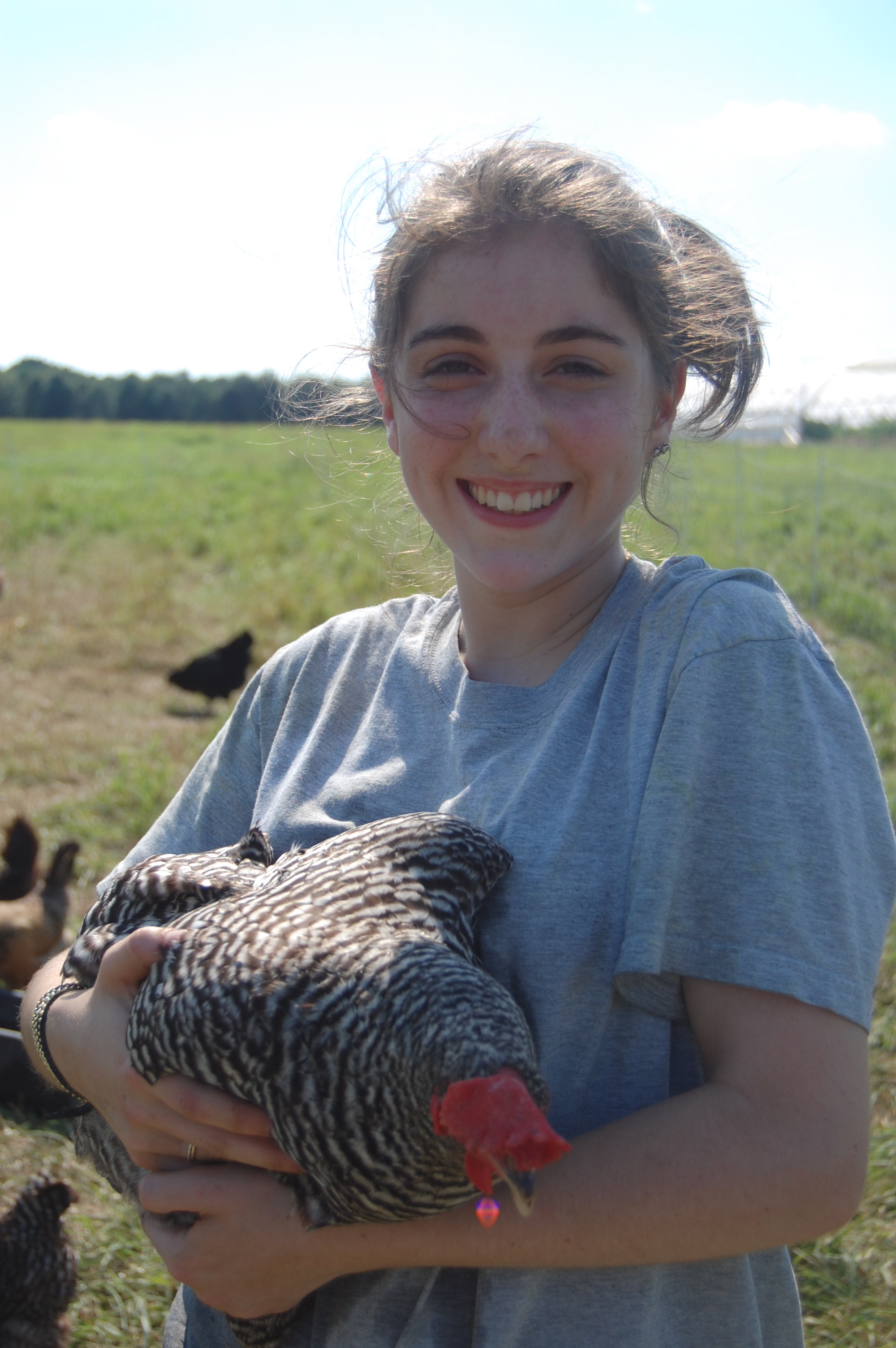
Now my egg supply comes from Old Friends Farm. We have over 150 layers and 200 chicks that are growing very quickly. They will be our layers for next season when we cull the hens over three years old. The chicks moved to fresh pasture and are very happy with their new home. What a beautiful new coop! And look at their view!

Three days a week I bike on the bike path, which runs directly behind the farm. After 40 minutes of pedaling without ever biking on a road, I take a narrow path to the fields, which are surrounded by conservation land.

The birds cast their songs and swoop down into the tall grass. The frogs bellow very low notes to contrast the Bobolink’s high pitched call. The powerful sun burns off the early morning dew lifting moisture into the air. What a great way to start the day!

My responsibilities include seeding, transplanting, watering, harvesting, hoeing, weeding, irrigating, processing greens, loading trucks, stringing tomatoes and cukes, chicken chores, and the list goes on. I love the diversity of projects and learning new skills with a team of incredibly talented people.

I usually spend my off time in my family’s garden planting annuals and the recent order of blueberries, raspberries and asparagus. I also picked up some garden gigs for other people. When I’m not digging in the dirt, I cook meals with friends and attend a Chinese Herbalism class in town.

Saying Goodbye to Heavy Winter Pancake Breakfasts

A Super Green Meal to Celebrate Spring

My transition thus far has been smooth, but also loaded with lifelong lessons. I try to remember not to push myself too hard because a tired, worn out body is useless in my line of work. I take the time to appreciate nature’s beauty and continue to find great joy in food production year after year. I know this will be another wonderful season and I am excited to share it with you!

2 Comments

Filed under Uncategorized

Back to the Birthplace

Four months have passed since I worked at the goat farm. I have traveled to South America, visited family and friends, and transitioned back to living in Northampton, my birthplace.

While working for Susan milking the goats and making cheese, I could not begin to imagine what I might be doing after the New Year. The routines I adopted felt so much a part of me that the thought of leaving the cabin and starting a whole new journey seemed totally surreal. I became part of the farm and each day the idea of leaving felt even further away, although it was frighteningly moving closer.

Waking up to Oliver walking across my face, frying fresh eggs and kale for breakfast, slipping on my muck boots, feeding the chickens, and tending to the goats was my whole life for a long time. Each job I was responsible for eventually became habitual. My muscles remembered each action as if I were programmed the way a young goat kid just knows where to find its mother’s milk.

Farming requires us to use every sense in our bodies. I had to pay attention to weather patterns and temperatures. Staying connected to nature and life cycles is not optional, it is mandatory. My mind tends to do a lot more unnecessary wandering when I am not in the present moment which farming demands.
These last four months were like a test. If I truly want to be a farmer, then I will struggle with not working on a farm for an extended period of time. I remember a friend of mine mentioning how much she missed working the land in February. She had rested, played, caught up with friends and family, and was ready to start another season. Likewise, by mid March, I felt like something crucial was missing from my life.

My situation is a little different because I did some farm work in Argentina where it was summer, so no more than a month had passed since I left the goat farm. Suddenly I was harvesting raspberries and weeding lettuce in February, how bizarre.

I truly miss farming. I miss the long days, bending over to weed rows, hoeing until my neck is sore, squishing potato beetles and tomato horn worms (or throwing them in the brook), shoveling manure, forking hay to the goats, driving a tractor, dumping heavy buckets of milk, getting dirt stuck under my nails and in the cracks of my hands, feeling utterly exhausted by dinner time, eating leftovers, reading a paragraph of a good book, falling asleep, and waking up to do it all over again.

It sure feels good to know what I want in life!

Finally, the farming season will begin again for me in a few days at Old Friends Farm in Amherst. In order to get my fix of agrarian living this April, I have been tending my folk’s garden in the back yard and visiting friends who live and work on farms. The spinach and salad greens are up, despite the dog’s foot print evidence of numerous visits to the compost pile, which is behind where I planted the greens leaving one inch deep tracks in my planting. I planted a row of peas, collards, and beets a few days ago. The kale starts love the warmth of my upstairs bedroom. Soon basil and parsley will show their little cotyledons in my other tray.

It is a very small scale here at the Jacobson-Hardy residence, but it sure feels good to dig ‘til my back hurts and make plans for the new blueberry, raspberry, and asparagus plants. We’ll see how much motivation and time I will have to weed the home garden come June, but who cares when it’s so enjoyable just to be outside, listening to the birds singing in agreement about how happy we all are that spring has arrived. That’s the difference between home gardening and crop production. If all else fails, at least we’ll have some nice flowering weeds along with the reliable poppies and black eyed Susan’s.

3 Comments

Filed under Uncategorized

Encontrando mi espíritu

Every since I was able to talk, I made wishes on the stars. I still do. The day I left the banks of Río Azul, I asked the higher powers for a few things as I began another chapter of my journey in Argentina: safety, courage, beautiful nature, and a powerful feminine energy to be my guide.

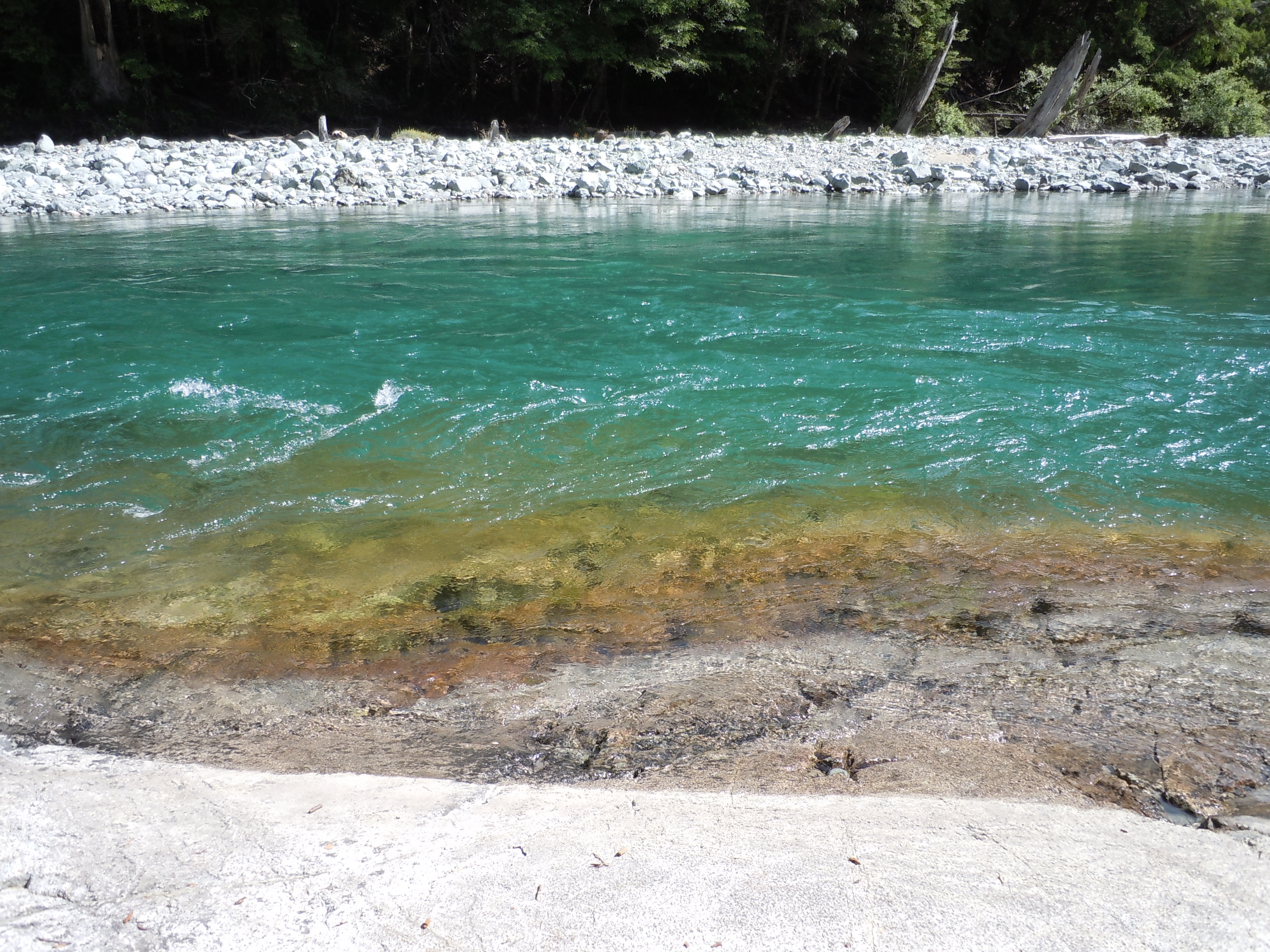
Tears swelled in my eyes as I put on my shoes and strapped on my backpack by the river. This would probably be the last time I saw her crystal clear teal waters again. “Adios, mi río. Te amo,” I whispered.

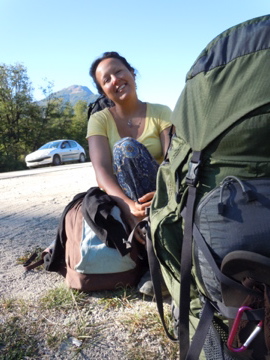
I heard someone behind me so I turned around a little startled. A young woman was pedaling her bicycle loaded with gear on the same dirt road I was about to walk along to town. How brave and strong she is, I thought. There is another young woman like me on her own journey. I took this moment as a sign that my prayers would be answered. The divine feminine would be a theme of the rest of my trip.

Along the trail to town trees were loaded with plums and ping-pong ball size blackberries glistened in the sun. I gathered handfuls and stuffed my mouth full as I hiked- sweet, sweet paradise.

The first thing I did when I arrived to town was head to la fería, the outdoor market to buy empanadas and ice cream. I noticed this was the first time I was going to eat alone in a very long time. Half of me was excited to catch up with myself, the other half missed the company of people.

Just before I got to the empanada stand, three women I recognized from the workshop called my name. “¡Hannah, venga!” We exchanged hugs and kisses. While sharing empanadas, local beer, waffles, and ice cream, we discussed our lives and plans for the next few weeks… and of course, boys.

Within minutes I had made a whole new agenda for how I would spend the next two weeks. Instead of eating steak, clubbing, and visiting friends in Buenos Aires, I was going to travel north along the Seven Lakes road with a beautiful Chilean woman named Alejandra. She is passionate about her family, permaculture, architecture, vegetarianism, chocolate, travel, photography, and large bodies of water. We were not only a great match, but she hardly spoke English so I had the opportunity to engage in meaningful one on one conversations.

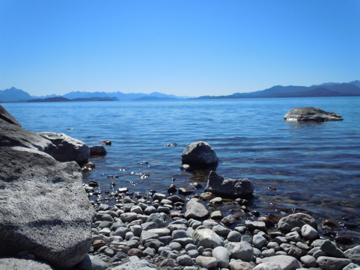
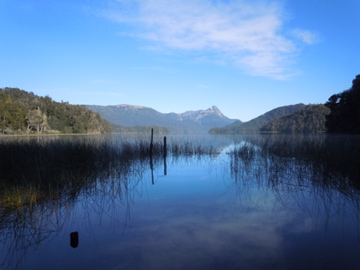
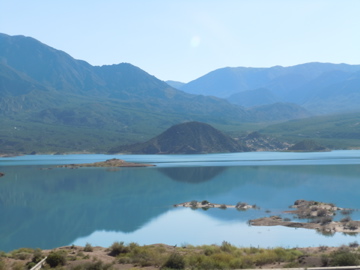
My new friend and I headed north to Bariloche where we indulged in chocolate and swam in the frigid waters of the grand Lago Nahuel Huapi. We camped by new bodies of water every night taking in the tranquility of deep glacial lakes in the heart of the Andes Mountains.

Fran hosted us for two nights when we reached San Martín de los Andes, a small town with lively parades and upbeat street theater. His mother, sister, and nephew invited us to have a picnic at Lago Hermoso, Beautiful Lake.

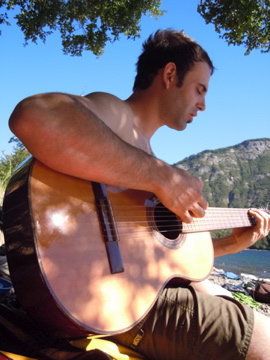
I can still hear the sounds of Fran strumming the guitar, Simón giggling on the beach, and his mother singing. ¡Qué día hermoso! I felt grateful to be sharing the day with a loving family who showed so much affection for one another, especially toward the one-year old nephew. I started to miss my family and home, desiring the deep connections I have with people who have known me longer than a few days.

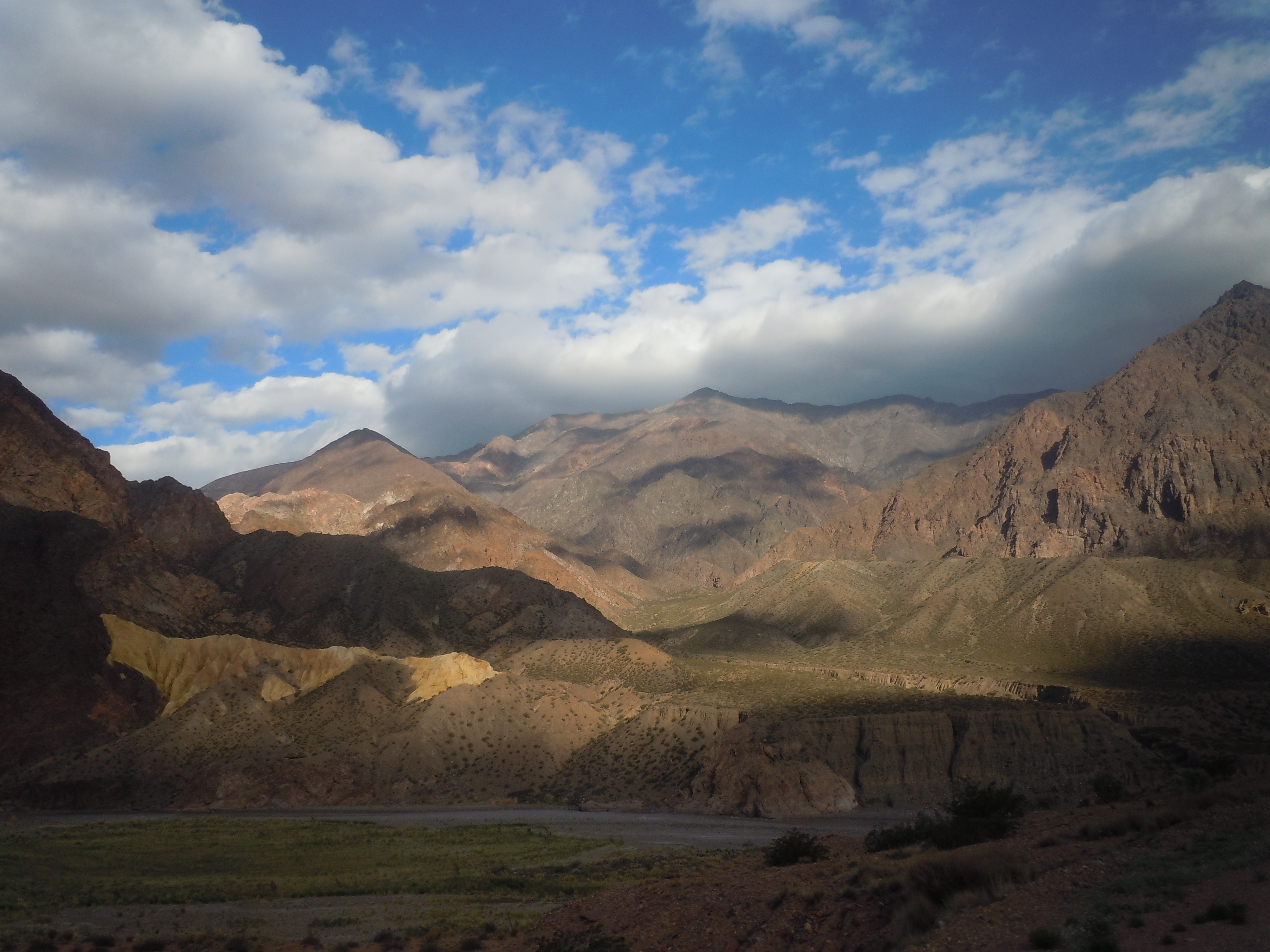
Early the next morning Alej and I parted ways. She returned to Santiago to see her sister who was having a baby. I boarded the bus to Mendoza to visit Ana, a young woman I met when she came to the goat farm for a tour last fall. Ana was landscaping and gardening in northwestern Connecticut for eight months as part of her studies. She is from Argentina and lives with her wonderful family while finishing her degree in agriculture.

While Ana studied during the day, I explored the city, lounged in the sun, sipped coffee at one of the many cafes that line the car-less streets, and most importantly, caught up on sleep.

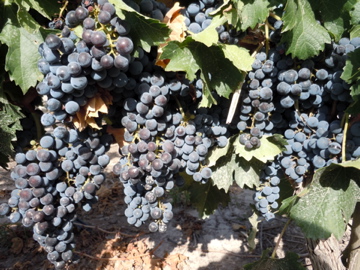
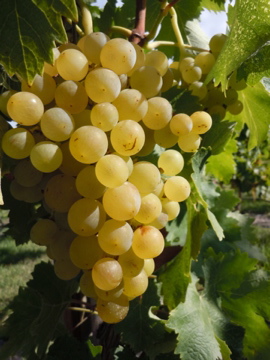
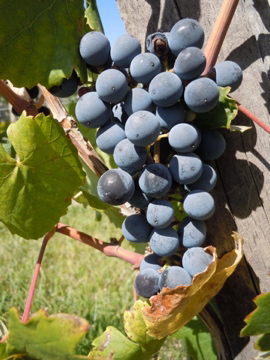
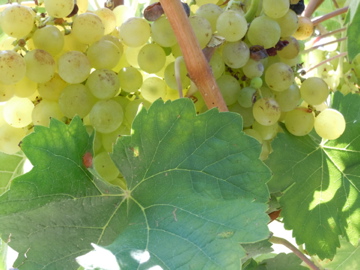
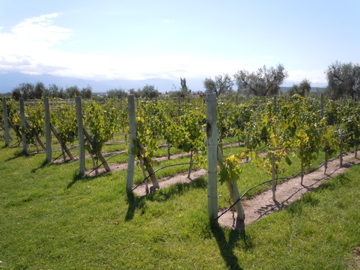
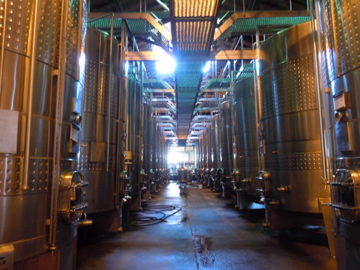
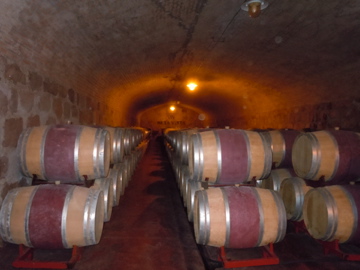
As much as I love to drink the fruit of the Earth, I am pretty ignorant when it comes to wine. Here are a few things I learned on a tour of a bodega, or winery: Torrentes (white grape in photos) is the only ‘native’ grape to Mendoza. I also learned that grape plants have to be at least 20 years old before the grapes are harvested to make wine. Many of the vines are between 90-120 years old. This information gives me much more respect for the production of wine.

White grapes are harvested first because they mature earlier than red grapes, meaning they have enough sugar to make wine. I gave myself a tour of the vines and I have to agree with the experts, I wanted to bring a bag of the torrentes home, but the red grapes were still quite tart.

As my departure date moved closer, I began to feel more ready to return home. Living with such a lovely family in Mendoza caused my mind to wander to how great my community is in Western Mass. I had seen more than my brain could process in the last two months, and I was tired of traveling. One of my many lessons from exploring far away places is how to stay open and positive regarding all situations. My energy was very open and my attention had remained outward for long enough- I was ready to turn inward and reflect on my incredible journey.

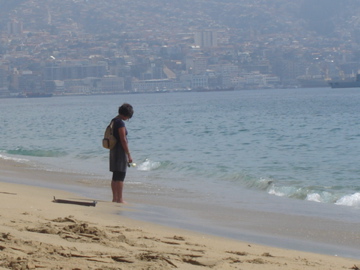
I spent March 8, International Women’s Day, and also my last day in South America, by the Pacific Ocean. In accordance with my sign, Aquarius, bodies of water- lakes, rivers, and oceans- were a theme of my trip. I feel most alive and connected to nature when my body is in contact with water.

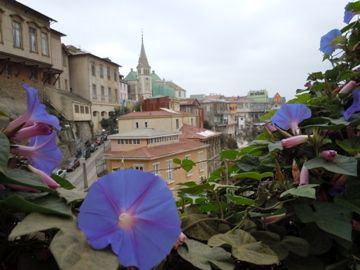
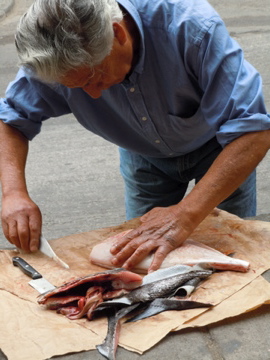
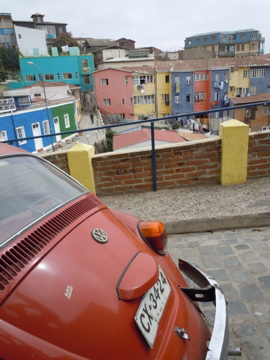
Alej invited me to stay with her at her home in Viña del Mar, Chile. Grape vines and the ocean…how could I resist? I went out with a bang and celebrated every last moment before boarding a plane! We did a yoga class in the morning followed by a hearty breakfast. I was in photography heaven as we strolled around Valparaíso, a city full of murals, graffiti, mosaics, and sculptures. This is what cities ought to look like- the celebration of artistic human expression and gardens everywhere. The fruit, vegetable, and fish markets overflowed into the streets.

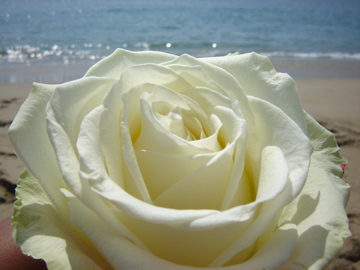
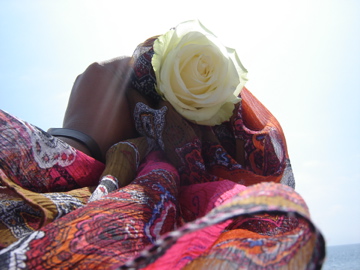
Seafood platters for lunch as we looked out over the ocean. Alej and I certainly felt like true goddesses that day. To top it off, we were each handed a white rose as we left the restaurant in honor of our womanhood.

una foto de alejandra

I said goodbye to the Chilean coast and thought of everyone who I met on my trip, thanking them for their kindness and generosity. I thanked those at home who were praying for my safety. Lastly, I asked for a smooth journey to the airport and to take all I have experienced and learned from my travels back home to the States.

I began this adventure in South America with an old friend, Laura, and ended with a new friend, Alejandra. I met lots of beautiful people in between. My spirit is strengthened by my relationships with other nature-loving people. May we all find peace by surrendering to the beauty of the mountains, rivers, lakes, oceans, sun, moon, and stars.

Gracías a los argentinos y los chilenos que me permitan en sus países. Con paz.

3 Comments

Filed under Uncategorized

Un mes en paraíso

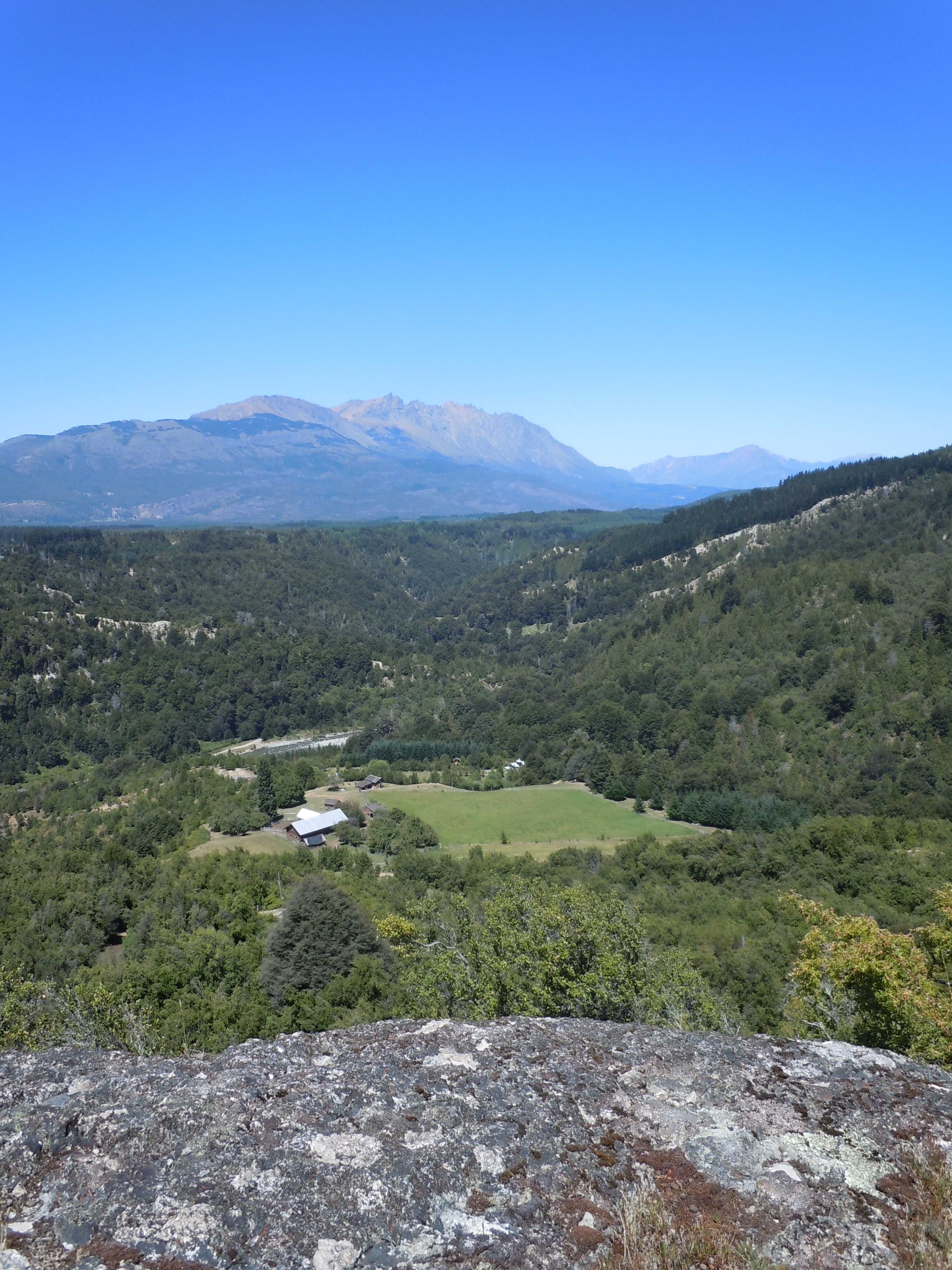
El Bolsón and the surrounding mountain ranges have been my home for the past month.  I knew when I first arrived late January that it would be a hard place to leave.  Río Azul is fed by glacier and snow melt from the cordillera. It glows turquoise green and blue like no color I have ever seen.  As the summer moved along, the water became shallower and warmer, but never quite warm enough to indulge in for more than five minutes. The refreshingly cold currents reminded me every day that I am alive. I inherited the name, `La Trucha,´ the trout.

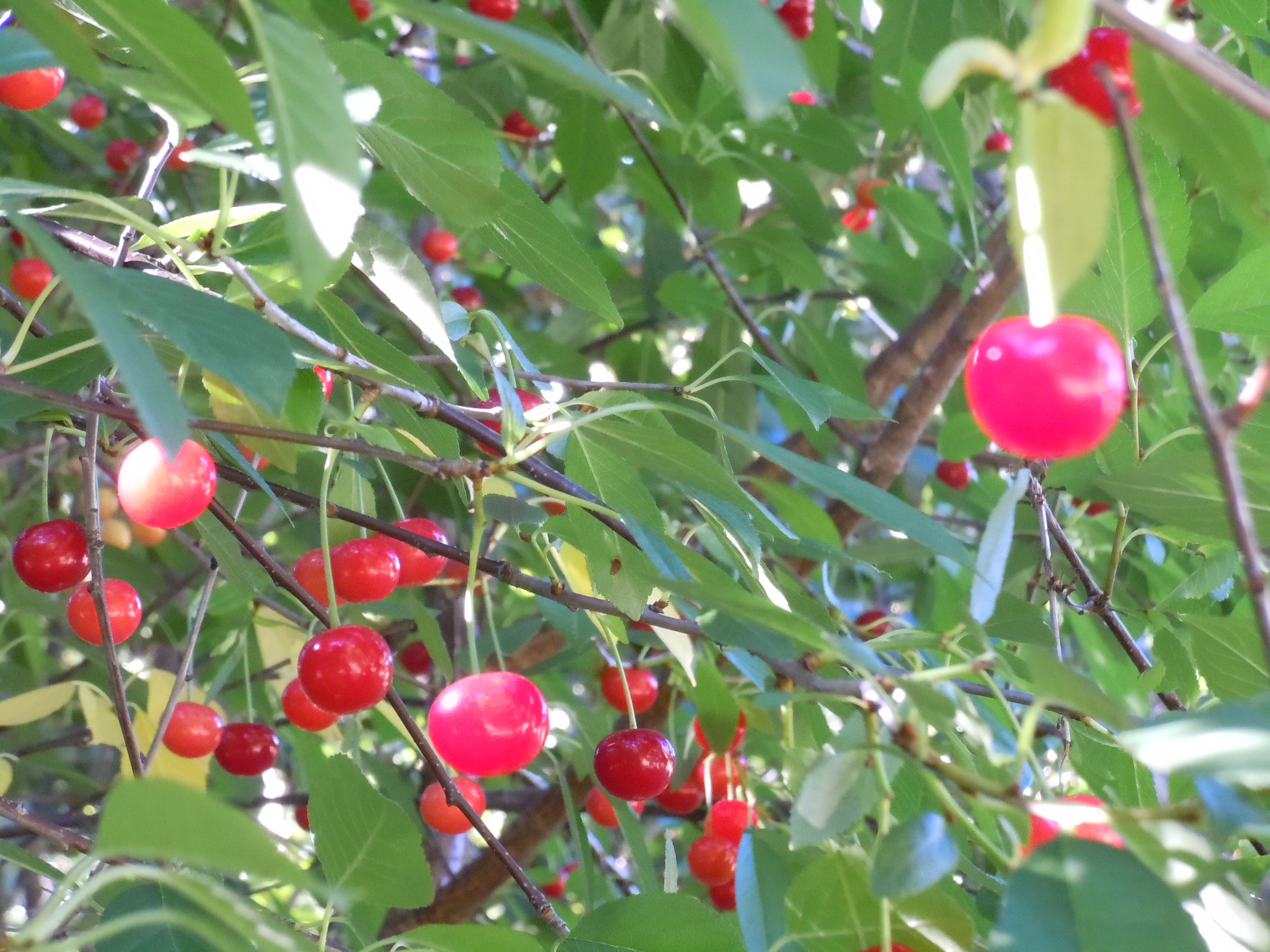
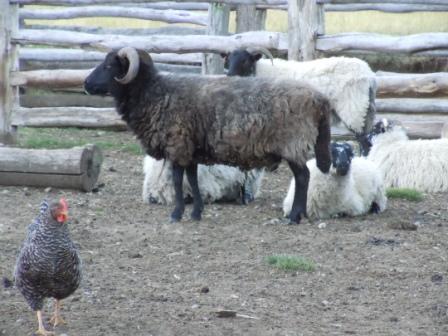
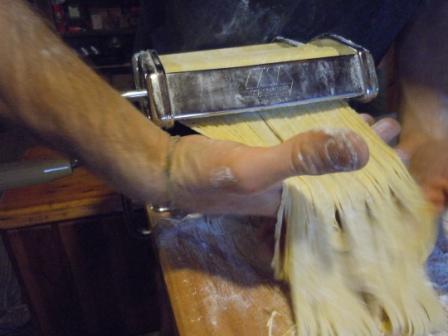
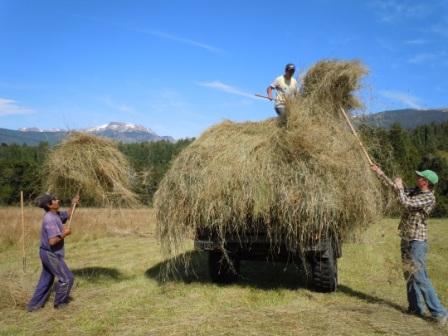
Some highlights from WWOOFing at La Confluencia were harvesting raspberries and cherries, bringing the cows and sheep home, manually storing hay during two of the hottest days of the summer, asado (BBQ) with the bridge building work crew,  watching the sun set from our porch, hiking to the glacier of Hielo Azul during a storm, watching the gauchos lasso cattle for vaccines, taking a hot tub under the stars and above the river, learning how to make pasta and bake sourdough bread, and of course sharing incredible homemade meals at the `upper lodge´ with my fellow WWOOFers.

After two and half weeks of volunteering in one of the most pristine places on Earth, I traveled down river a few miles for a week long workshop focusing on bioconstruction. As I was waiting for a bus to take me to the workshop, a beautiful Chilean woman picked me out of the crowd and grabbed my hand. `¿Bioconstruyendo?´ she asked me. `¡Sí, vamos!´ Let´s go I responded.  This quick, brief interaction with my new friend confirmed in my mind that everything would be alright for the next week. I once again felt held by the world even though I was traveling alone.

We arrived on foot after the bus dropped us off at Doña Rosa. The bus stop is named after a woman healer who once lived on the property where the Permaculture community is currently. Pastor Silvestre and others joined together to buy the land from her children after she died. The property is called Valle Pintado (Painted Valley).
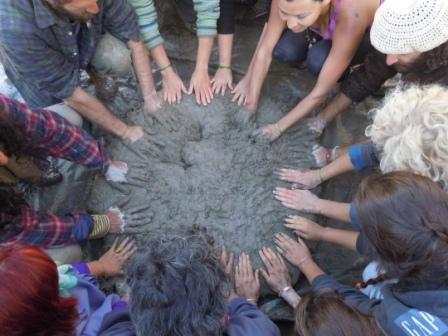
Two men greeted us and gave us a tour of the site and where we could set up our tents. We were fortunate to arrive early because with 150 participants, the forest would soon become tent city and a flat shaded spot may be hard to find.

While eating a delicious vegetarian lunch, I was greeted by many new faces. A kiss on the cheek, a hug, and introductions- these three actions took up the majority of my time the first day. I lingered from group to group making new friends and listening to conversations in Spanish. There were English speakers around, but I admit I avoided them for a while so I could really immerse myself in Spanish. Even among my fellow Americans, we tried to converse in Spanish as much as possible.

The site was bustling with people pushing wheelbarrows, making straw and mud bricks, installing solar showers, setting up a huge geo dome, putting together a tipi, finishing walls with clay, and mixing large mounds of adobe. All week long would be like this- including workshops, lectures, music, yoga, massages, eating at picnic tables outside, mate breaks, and playing in the river. We were essentially learning how to build a community out of earthen materials and having a lot of fun in the process.

¡Que línda!  is the expression I heard most throughout the day. It means `How beautiful!´ I have never seen or felt so much love and openness from such a large multigenerational, mixed heritage group of people. Even with the language barrier, I was welcomed into every circle and never felt any judgment or negativity. More and more each day I became more connected with nature, the river, the people, and the work. I began to forget about everything outside of Bioconstruyendo.

My routine consisted of waking up around 8 a.m. to the sound of flutes, sharing mate by the fogón (fire) since it was chilly until the sun came over the mountain, eating a breakfast of fruit and granola, morning circle, talleres (workshops), maté break, back to talleres, almuerzo (lunch), siesta (napping, swimming in the river, chilling out), talleres, maté break, talleres, la cena (dinner), music, and finally sleep. The days were long and very full.

On the night of the full moon the women gathered in the tipi. We shared stories and sang together. The last night we had a fiesta and danced to drums in front of the fire. We chanted and called to the rising moon. We worshiped the pachamama (Mother Earth) all week long. I felt strong and whole knowing that the group supported woman´s liberation to its fullest.

I had a hard time leaving when Monday finally arrived. People lingered and I had no set plans…maybe head north to Bariloche and then visit friends in Buenos Aires?  I decided not to let any of this stress me out and just to go with the flow. A large group was going to spend the afternoon upriver at a swimming hole called Paraíso. When someone asks if you want to go to paradise, how can you say no?

La trucha just could not leave her river. We hit the trail and next thing I know I am diving into the deep green waters, crawling up rocks, watching the rapids flow by with a giant smile on my face. This is where I am supposed to be right now, I thought. Right here with these beautiful people in this pure river. The water is so clean and cared for by the people that I stopped filtering it long ago. How rare and special it is to be able to drink straight from a river at this point in time. The people of El Bolsón have fought to keep the river free of industry.  Yes, this truly is paradise, heaven on Earth.

I plunge into the current so I can effortlessly be taken back to my friends and suddenly everyone is shouting. Pastor has harpooned an enormous trout! La Trucha! Not me, thank goodness. I crawl onto the rock where he has just ended the fishes´ life. I hear a splash and he has caught another one almost twice the size, 2 feet long! I sit next to him watching as he wrestles with it and bashes its head (careful not to destroy the precious cheek meat). It was all very exciting and emotional- taking the life of a very ancient fish so quickly. It was the grandfather of the river and now…ASADO!

That night we put the newly built horno de barro (mud brick oven) to use by making pizza. We grilled beef and chorizo (sausage). And of course, la trucha, which was marinated, spiced, and garnished beautifully before heading for the horno de burro. Wine, fernet con coke, and homebrew beer that had been stashed in the river to keep cool flowed freely throughout the evening. I was happy I chose to stay and grateful for the invitation.

4 Comments

Filed under Uncategorized

Beyond Limits- Argentina’s Natural Wonders

Finally I have a solid chunk of time to write and the only major distraction are the two playful puppies sharing my bean bag. The three of us sit on a porch overlooking the mountains and valley of El Bolsón. Sheep are grazing and blatting in the background. Cows are trying to find more food in the hills. Roosters crow now and again. The strong wind pushes rain clouds east providing short showers and intermittent sun.

For the first three weeks, Laura and I traveled non stop. From Santiago we took a bus over the Andes into Mendoza. We headed south to the Lakes District Region, which included more than 20 hours of busing. If there’s any way to get the complete opposite experience that backpacking in the woods provides, I highly suggest getting on a bus for at least 18 hours. There are violent American films dubbed in Spanish, less then appetizing meals wrapped in celophane, endless sweet sodas, and stinky toilets. However, the ‘semi cama’ (semi bed) is pretty comfortable and not so bad for sleeping the day away.

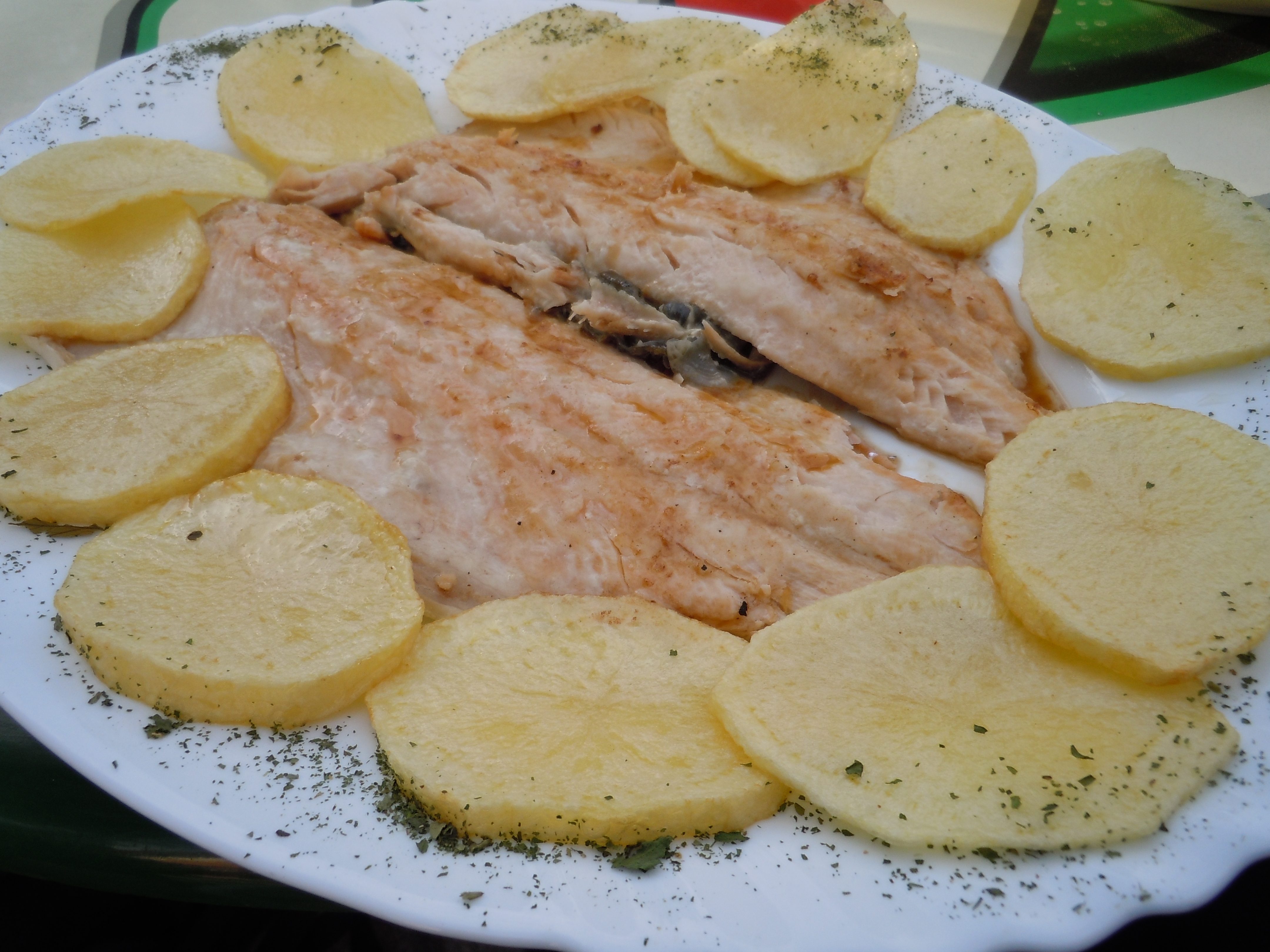
Junín de los Andes was our destination. When we arrived we had new friends to point us in the direction of camping and town. It happens to be Argentina’s trout capital, so we indulged in some of the best trout I have ever eaten. This was the first good meal I had since I left the States. We have been eating what, I believe, most Argentineans consume: meat, sugar, bread, and mate. Not exactly what I live on at home as you know, but it will have to do. Once I stepped off the bus and got to know some people, I realized that each ingredient can be prepared with thoughtfulness and taste excellent. The carbs and sugar bring me down, but then the mate brings me right back up. A balance, I suppose.

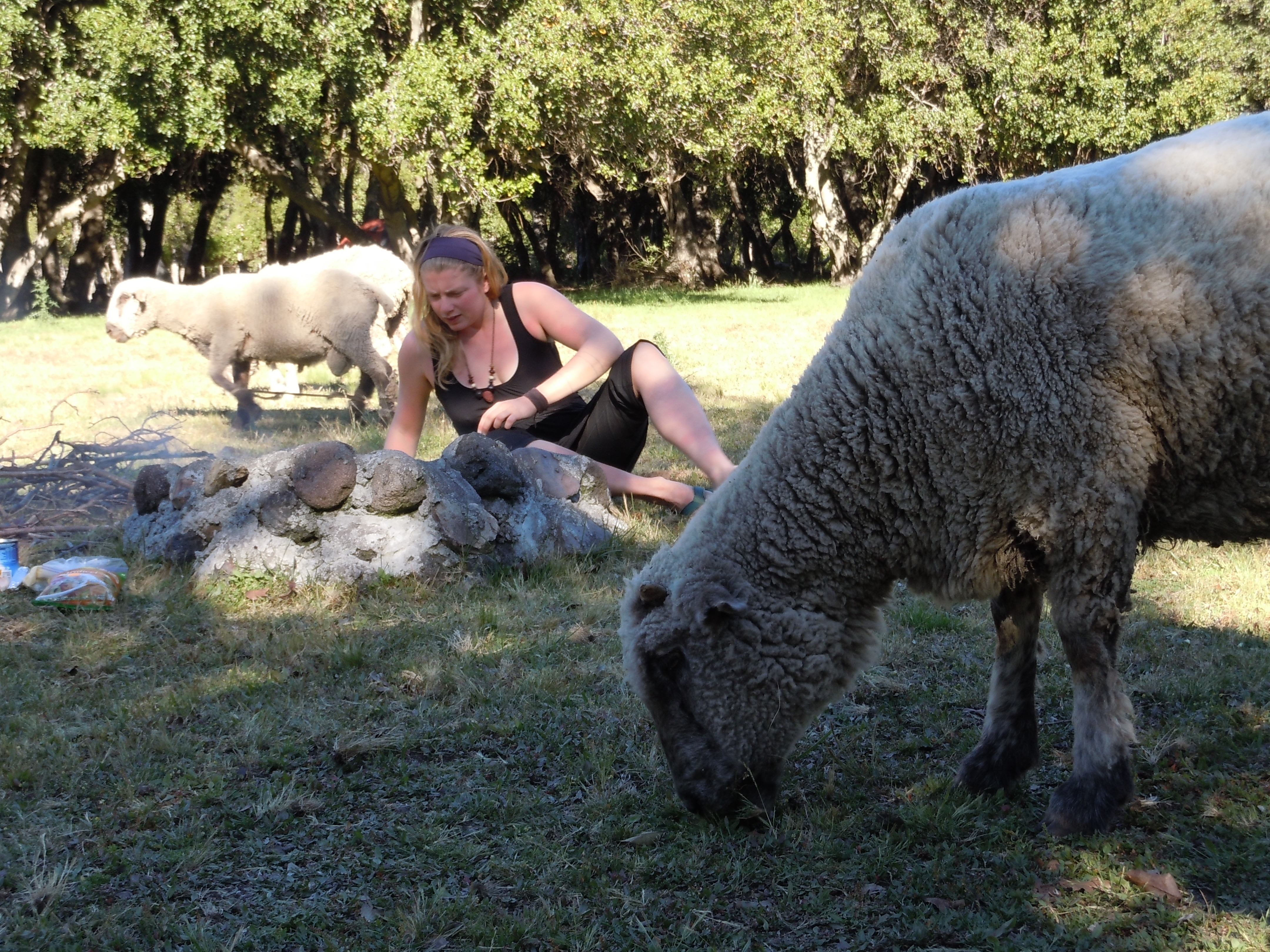
On our second day camping in Lanín National Park, our new propane stove caught on fire. We had to buy this one in Santiago because we could not find white fuel for the stove we brought from home. What I normally would have thought to be a very distressing situation, turned out to be an opportunity to learn how to cook on a fire. Two lovely women camping nearby taught us their technique and we successfully made dinner. The next night some other friends we made on our bus ride arrived and they shared asado (BBQ) with us. I am grateful for everyone’s generosity and willingness to help Laura and I when we are lost, confused, hungry, or tired.

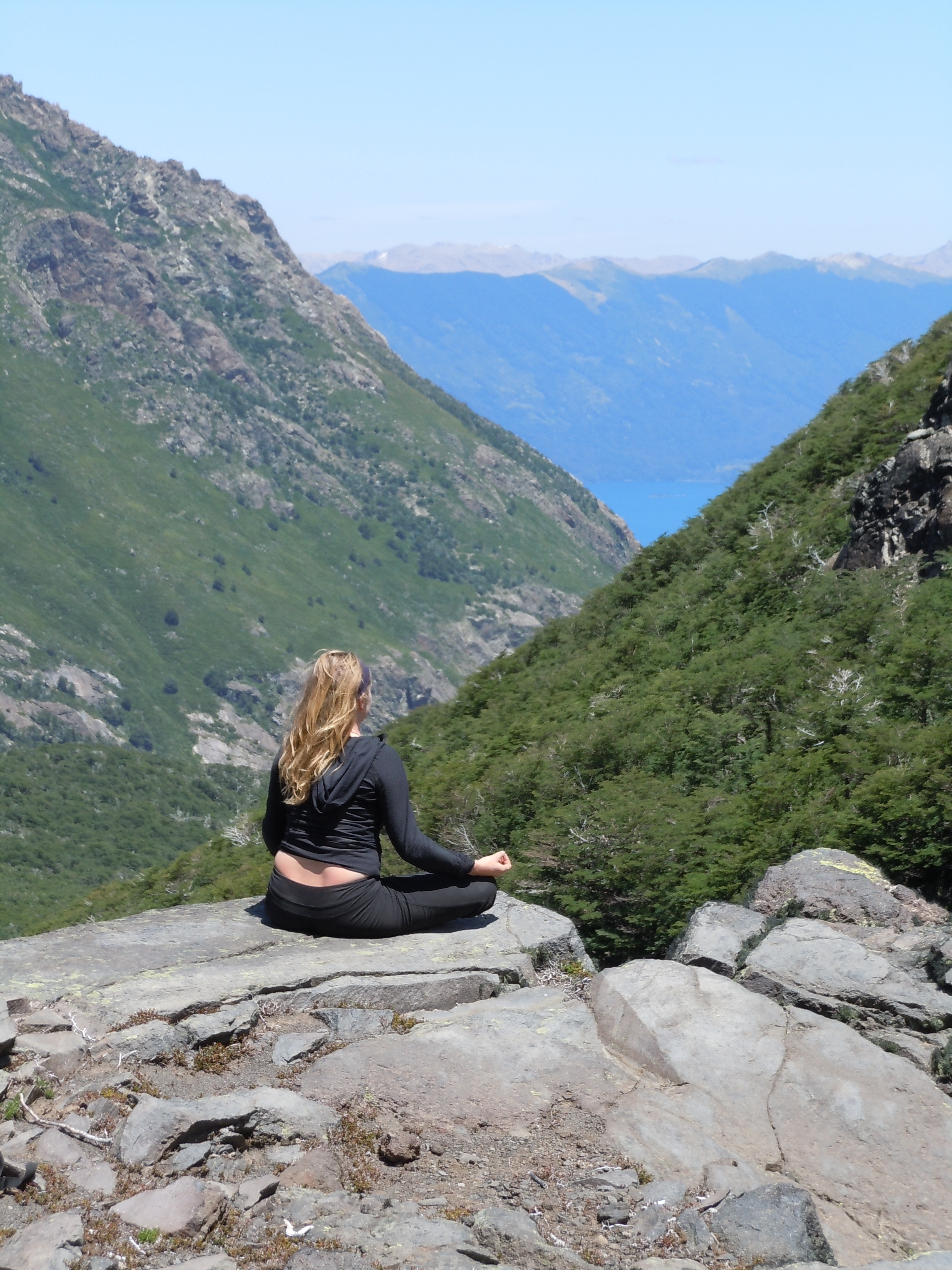
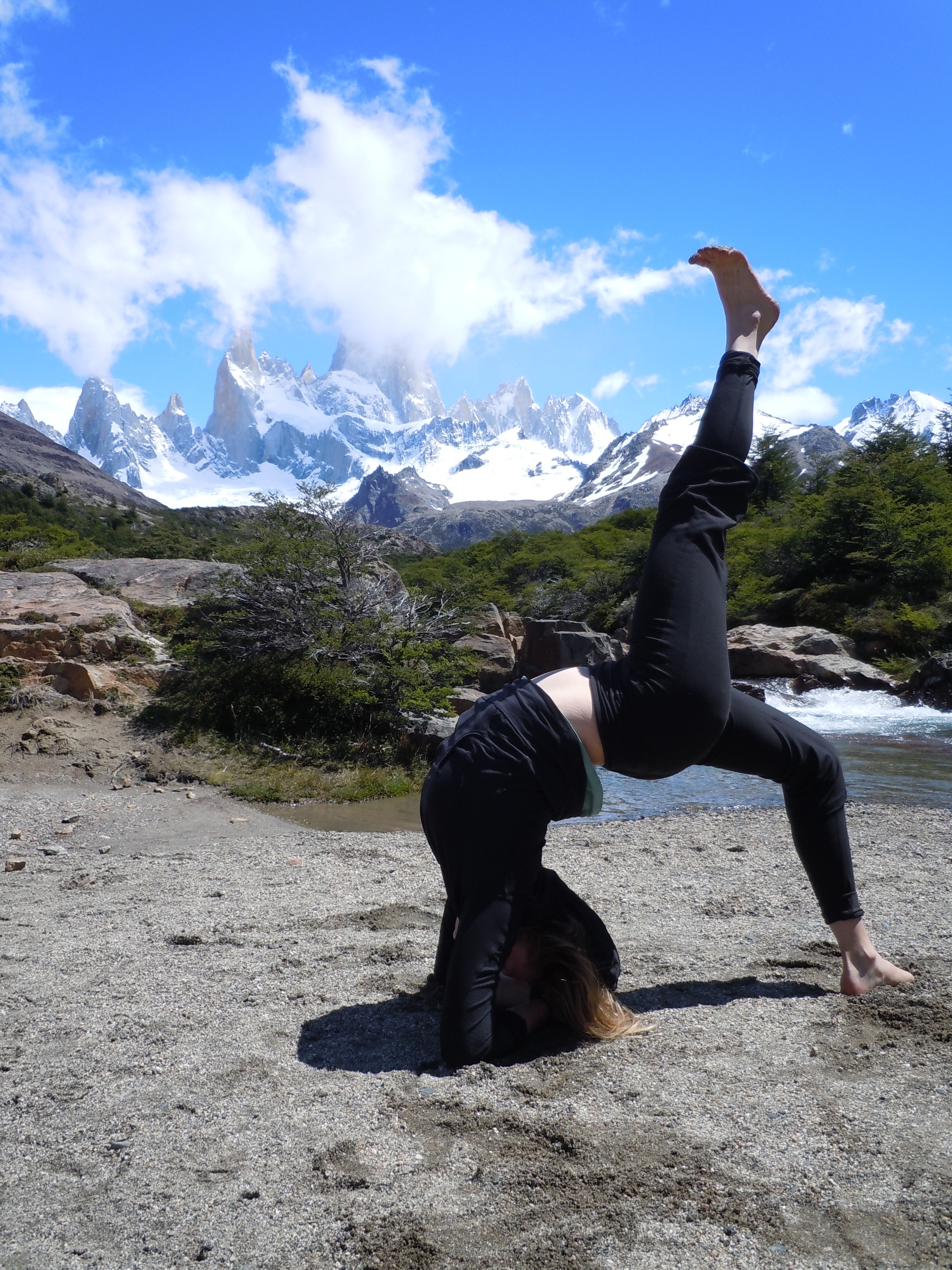
For five days we camped under the clear star filled skies next to a giant lake located below Volcan Lanín. We hiked to the base of the volcano along a roaring glacial river stopping to drink and eat lunch. We did yoga on top of a rock above a waterfall. We meditated with the snow capped peak and wildflowers. The culmination of our stay in Lanín was diving into Lago Paimun from a black sand beach. Singing and swimming beneath a moon in the brilliant blue sky and mountains all around was what truly being alive in the moment feels like.

Patagonia was our next destination. After a strong dose of the outdoors, a long bus ride wouldn’t be so bad. It would give us a chance to get out of the hot sun and rest our legs. 48 hours later, we arrived in Río Gallegos, the last large town before the tip of the continent. There’s no real reason to go here unless to change buses or buy food at a very super supermercado.

While waiting around for our connection to Calafaté where we planned on accessing Torres del Paine NP, I asked some friendly guys with big backpacks where they were headed assuming they too were making the journey to Torres to hike the “W” or “Circuit” around one of the most incredible mountain ranges. They were from Buenos Aires, but like many Argentineans, were thrilled to speak English. “You are not going to Torres,” they informed us. “We just hitch hiked for two days from there because southern Chile is on strike over raising fuel prices and all the roads are closed.“ So much for that plan.

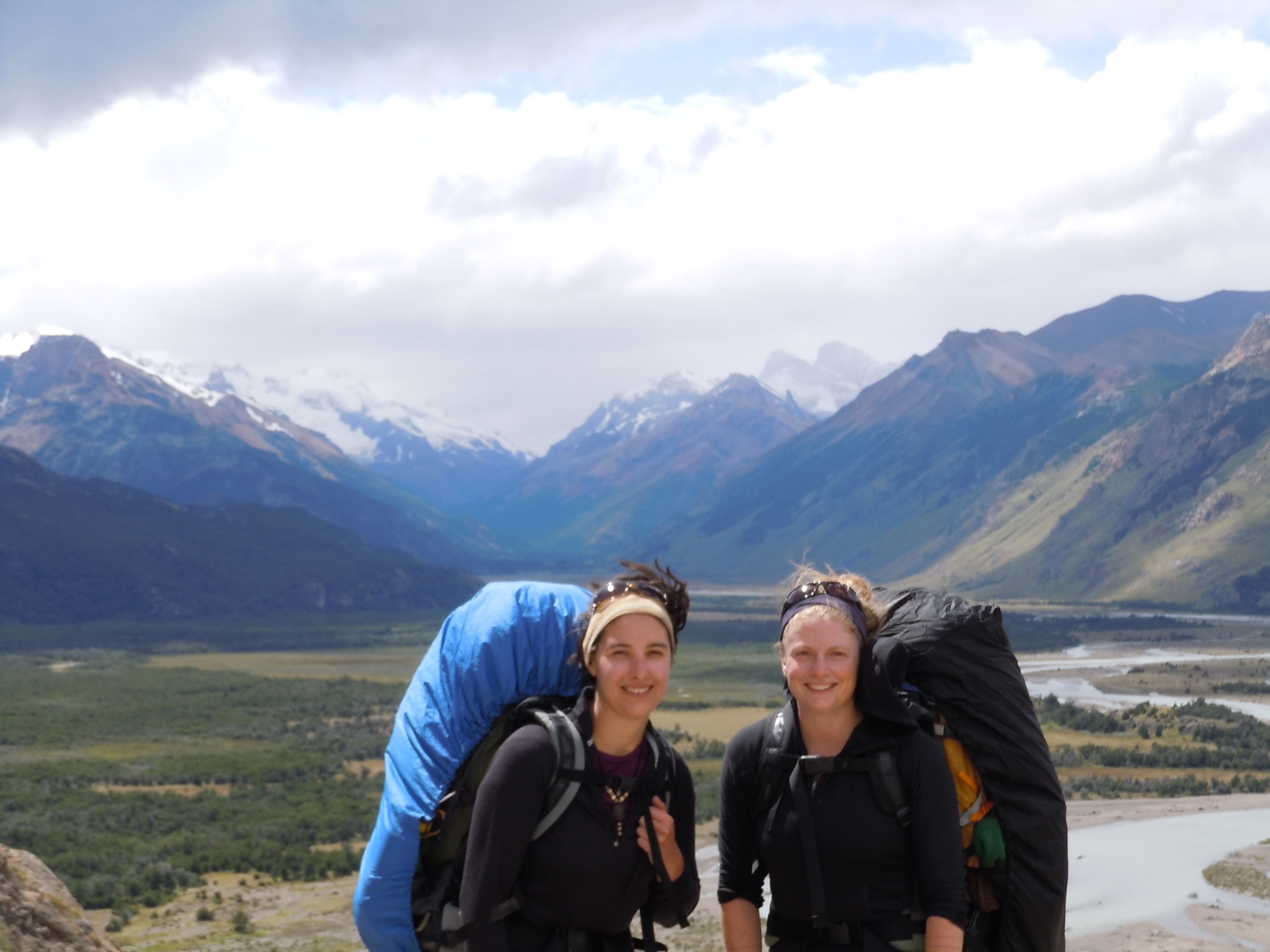
We took their advice and added on another 3 hours to our bus ride to get to El Chaltén,  a small mountain town with access to trekking all over Glacier National Park. We happily strapped our backpacks on and took off into the mountains for another epic journey. This time, the elements were very different.

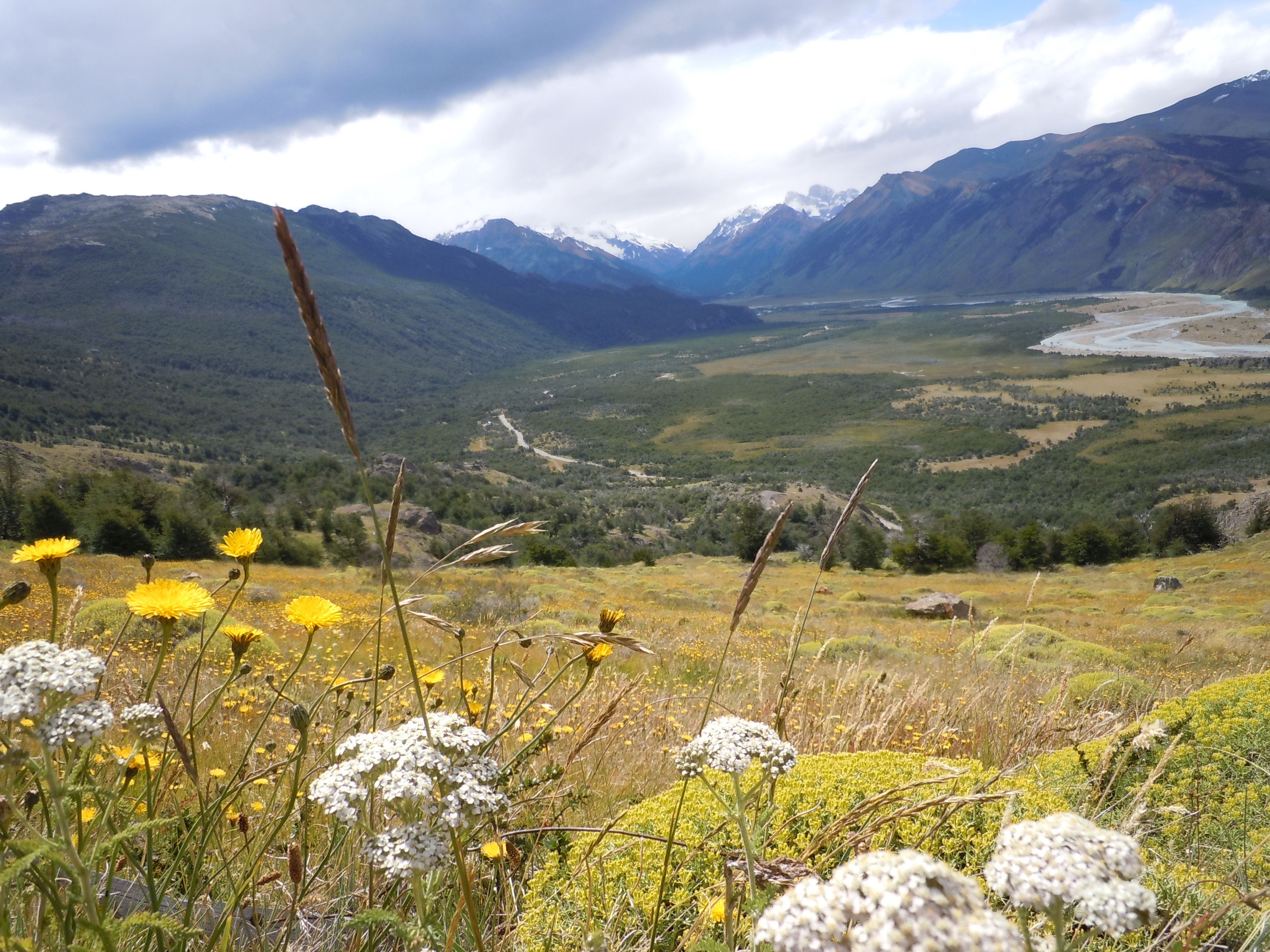
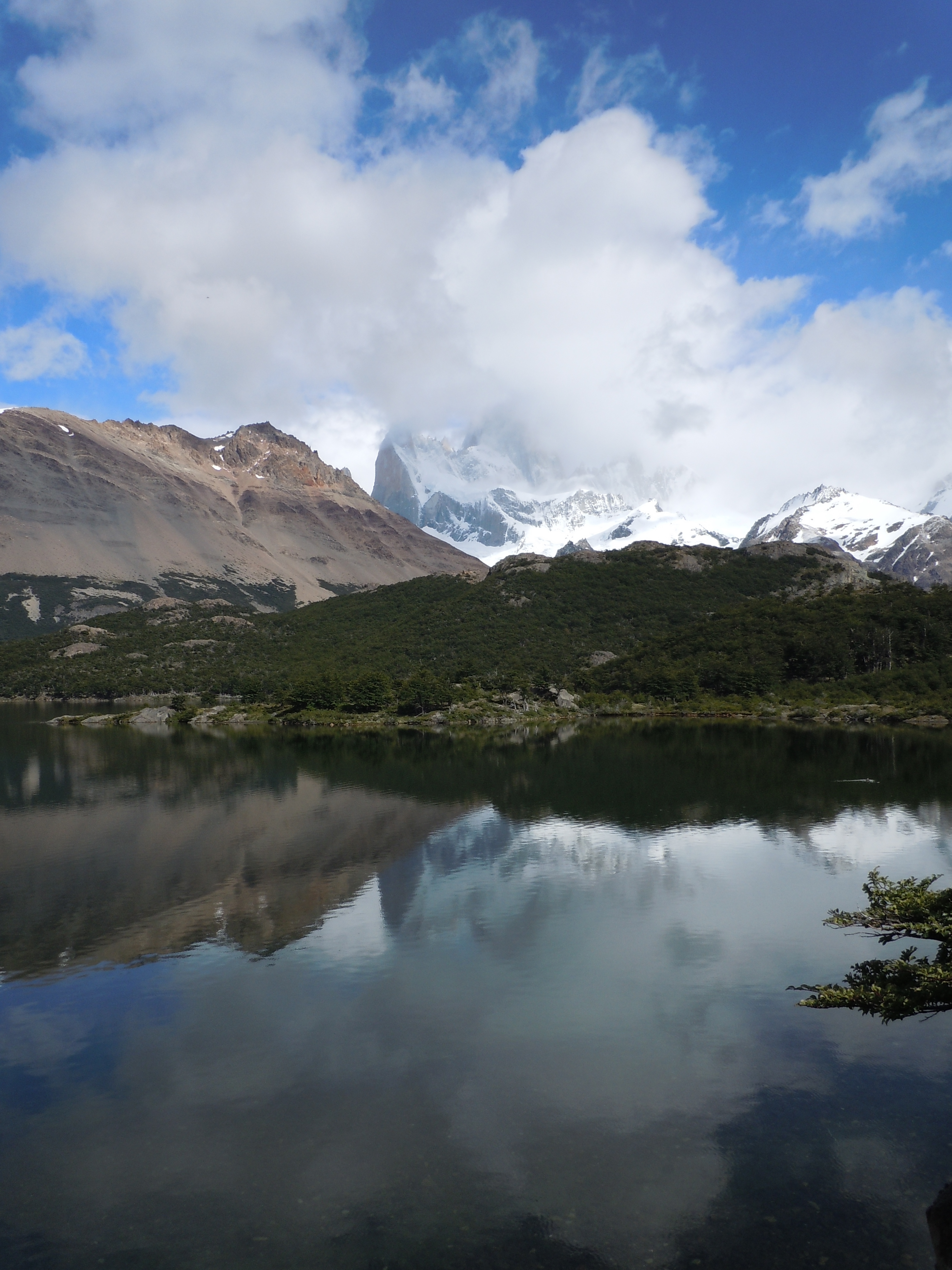
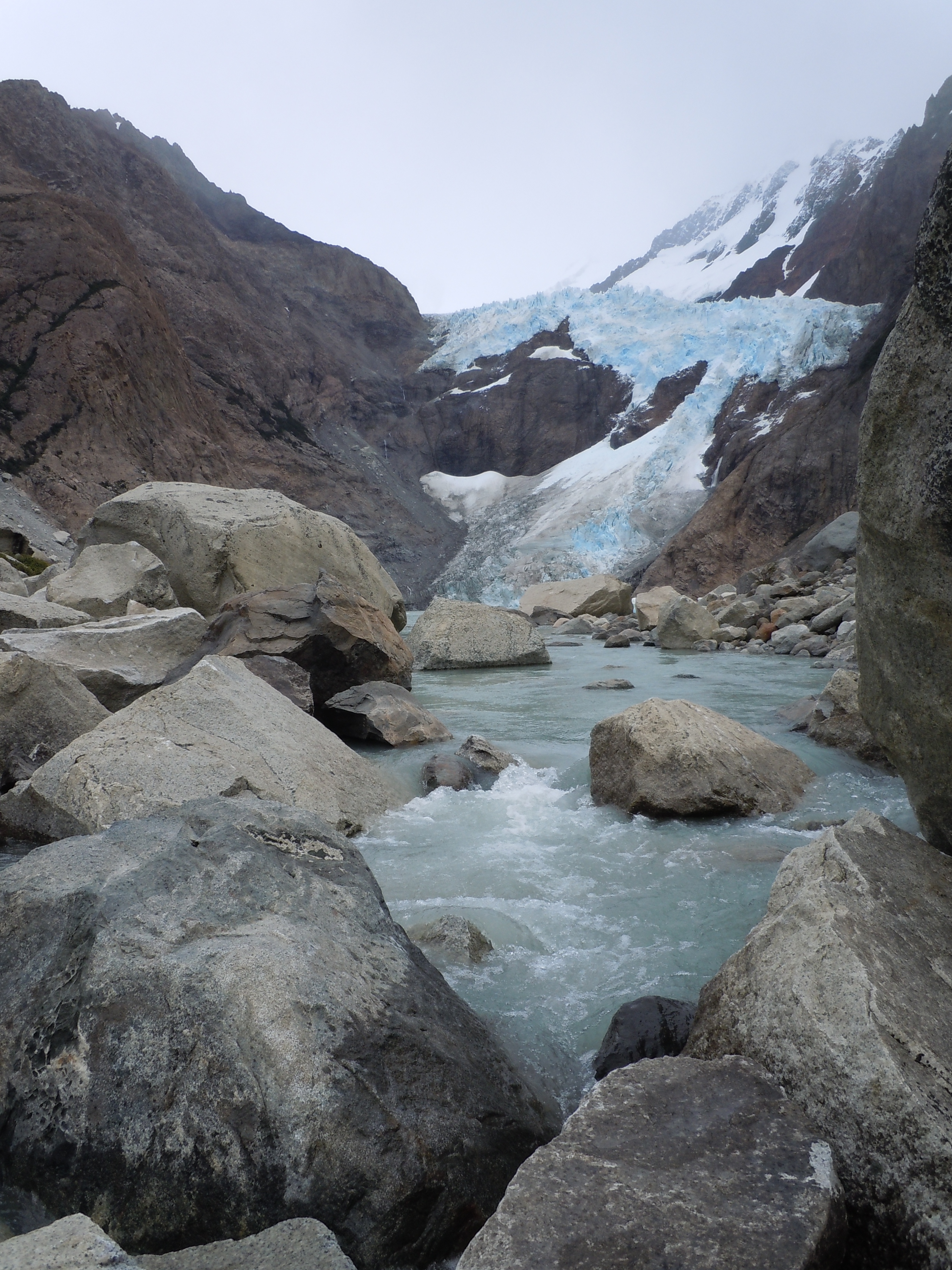
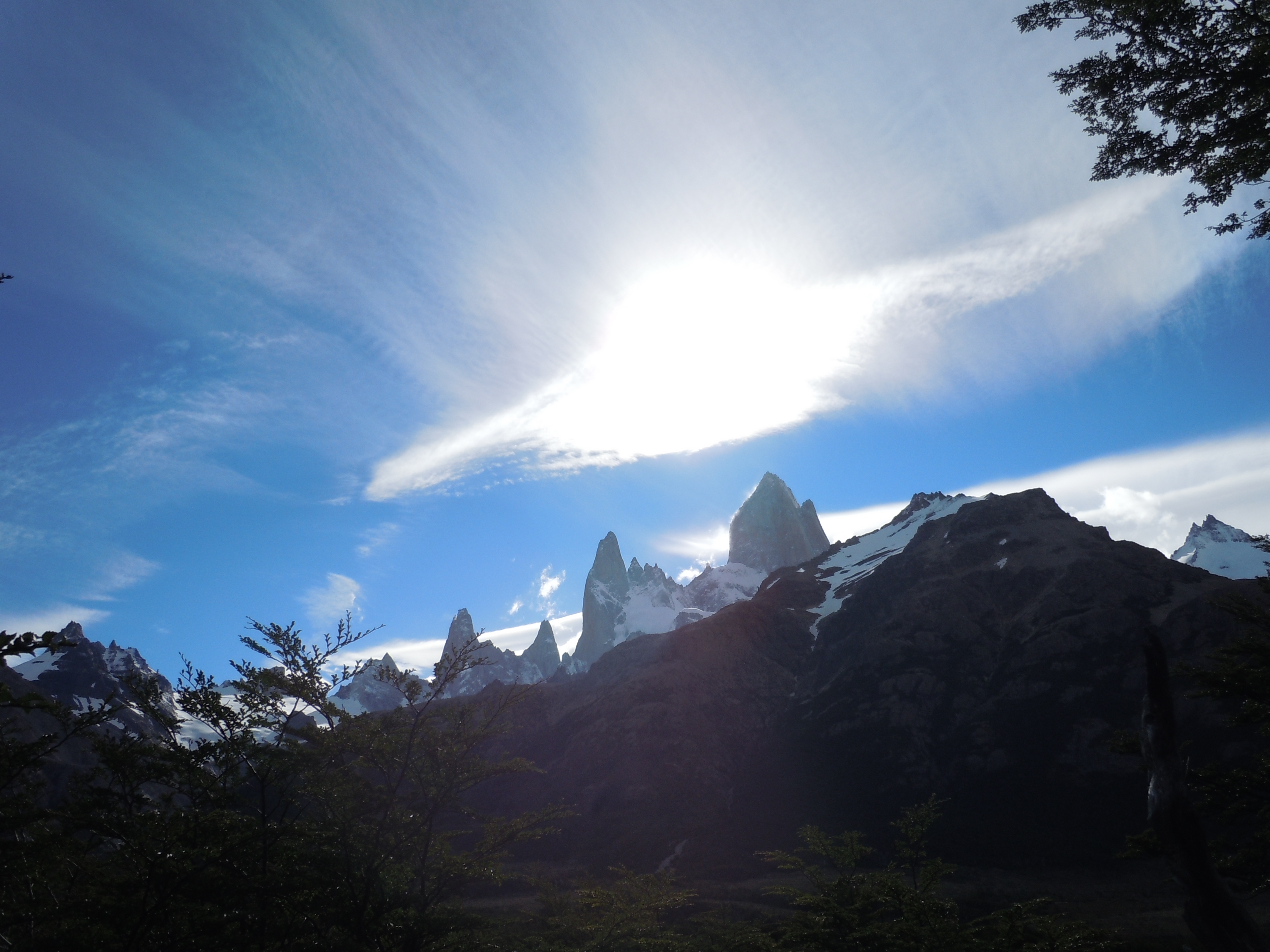
Patagonia is full of indescribable beauty only understandable by using all our senses. Photos cannot capture the crisp air filling my lungs, brilliant colors painted across the sky at dusk, strong wind challenging my stance, rugged terrain that scrapes my hands, and mineral rich water from the rivers. We witnessed Fitz Roy Peak clear from the clouds while laying on red rocks by a river. We witnessed part of the blue glacier crack off and roll down the steep icy slope into a sage green lake. We witnessed a rainbow in the valley below Cerro Torre when we walked out of our tent in the morning. After five nights in the inhospitable climate of Patagonia, we were ready to head back north where we could wear less than two layers of pants, four shirts, rain gear, hats, and gloves.

Laura and I lay in our sleeping bags in the tent reading about El Bolsón, the town where I am currently WWOOFing (Willing Workers on Organic Farms). The book described vegetarian fare, artisan markets, hiking, warm temperatures, and lots of small farms. We were sold! We packed up and caught the next bus north dreaming of wearing t-shirts and sandals.

We got what we wished for and more- our first real salad! We hiked up a steep trail to a campground along Río Azul and managed to get a mostly private site along a sandy beach by the river. We soaked up the afternoon sun, dunked in the frigid water, and slept outside under las estrellas, the stars. By the way, the sun doesn’t set until 10 p.m. here so by the time the stars are visible, I am ready to go to sleep. The days are very long and people don’t eat dinner until 9 or 10 p.m. The sun is back up by 6 a.m. so i always feel like I’ve overslept but it will only be 8 a.m. when I get out of bed. People here have very slow leisurely mornings. We took turns waking up one another having already heated water for, “Maté on the beach!”

We day hiked to Cajón de Azul, a Refugio one of our friends recommended where the river runs 50 feet below a narrow canyon only about 4 feet wide. Laura immediately picked up the guitar and played for an hour. We sipped more maté and ate salad from the nearby garden. The day ended with hiking, dipping in the river, drinking home brewed beer and homemade bread, and eventually star gazing. We said several wishes out loud. Then, fell asleep to the sound of rushing water, dreaming side by side.

I said goodbye to my dear travel partner as she boarded a bus back north to fly home. I wiped away my tears of sadness and also joy. Here I am. A strong woman now alone in Argentina. I have a light backpack with all my belongings including my tent. My muscular legs will transport me to my next destination, La Confluencia, a farm/eco lodge along the same river Laura and I camped along. The amount of freedom I felt when my friend left was incredibly exciting, but somewhat scary. There were so many unknowns, but somehow, I knew it would all work out.

The night before Laura left I asked for two things: 1) meet amazing people 2) eat real food, specifically kale. Both my prayers were answered. I arrived at the farm on foot around 7 p.m. greeted by vegetable gardens, Jersey cows, and two puppies Osa and Perdita. The cook, Chelsea was preparing a Mexican style BBQ of chicken, beef, salsas, quesadillas, peppers, onions, tomatoes, avocadoes, corn chips, beer, wine, cheese! “I have found heaven,” I thought to myself. Really good people sharing really good food together in one of the most beautiful places I’ve ever been, hallelujah!

For breakfast the next morning I had scrambled eggs, kale, sourdough toast, homemade raspberry jam, and of course, maté. Laura was supposed to eat a large bowl of kale for me when she got home, but I beat her to it because she was still in the air while I was chewing on the best vegetable on earth. I miss laughing with her and sometimes I say things in my head that I know would make us giggle until our tummies ached. We carried the love we share for the earth and its people everywhere during the trip. I still hang on to that energy wherever I am even without her here. I am so grateful for our time together scrambling the terrain of Argentina and making the best of every moment. I miss her company, but now we must celebrate and share all we have experienced in our separate lives. She will be doing good work at home, and I will be…hmm…picking raspberries, making lamb sausage, watering tomatoes, hanging garlic, feeding sough dough starter, building bridges, and cooking fabulous meals with my new farming friends.

8 Comments

Filed under Uncategorized

Goodbye Monterey, Hello Chile!

As I trudge through the snow back up to the cabin from the barn, I realize this is one of the last times I will make this journey home. Home to a warm cabin where my cat sleeps away the blustery days. Home to the hens who make their rounds pecking and scratching at the ground. Home where it’s so quiet that the sound of a plane’s engine high above is what reminds me there is a big world beyond the goat farm.

The last few weeks were jam packed with celebrations and goodbyes. I packed all my belongings, gave my chickens to friends who spoil them with warm milk and mash in the morning, killed and skinned the rooster for a delicious dinner with Gould Farm friends, and drove home with a very full car on Christmas Eve. My family greeted me warmly and helped unload the boxes.

Taking my home apart that I created over the last 18 months was very sad. It’s hard to say goodbye to a place that has been so supportive and healing for me. I feel very blessed to have found Susan and her goats. I could have stayed for years, but I know it’s time to throw myself back into the whirlwind of travel, adventure, and new experiences.

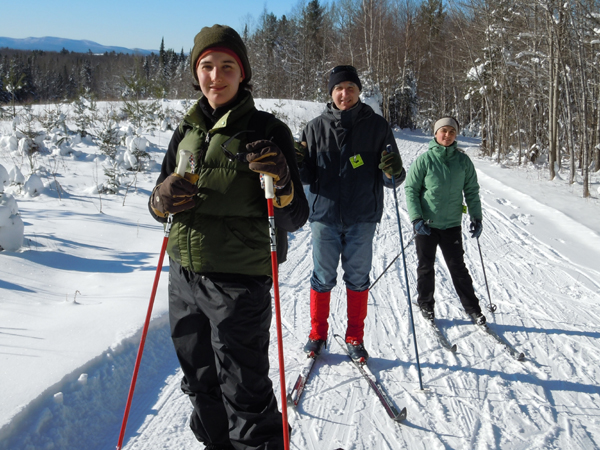
The combination of a major change in my routine and having my life in boxes all over the place has caused me to feel a bit imbalanced since being back in Northampton. I take it one day at a time. First Christmas in New Hampshire, then a family x-country ski trip in Vermont, then at my parent’s house for four days before…Chile and Argentina.

I leave in a few hours. 6,000 miles south. The same longitude as S. Africa. With nothing but a light backpack, only the bare necessities, I will explore the Andes Mountains, lakes, rivers, woods, and pueblos. I will improve my Spanish, backpack in national parks, take loads of photos, eat new foods, WWOOF, and visit a friend in Mendoza during Argentina’s wine harvest festival in early March. Two months later, I return to the Pioneer Valley for another farming season.

Here I go!

1 Comment

Filed under Uncategorized